Discover Singapore's Michelin-starred hawkers and restaurants on guided food tours. Compare tour types, what to book, and when to reserve.
Who Michelin Food Tours Suit Best
A Singapore Michelin food tour is a narrow product for a specific kind of traveler — not everyone needs one. If you already know your way around a hawker centre, speak enough Mandarin or Hokkien to order confidently, and don't mind standing in a 30-minute queue at a stall like Hill Street Tai Hwa Pork Noodle, you can do this yourself for a fraction of the cost. But most visitors to Singapore, especially first-timers, don't know which of the hundreds of stalls across Chinatown Complex, Maxwell Food Centre, or Tiong Bahru Market are actually Michelin-recognized versus just popular with tourists.
That's the gap these tours fill. A guide who tours hawker centres daily knows which Bib Gourmand stall has a shorter line at 11am versus 1pm, and can explain why a $5 plate of char kway teow earned recognition from the same guide that rates three-Michelin-star tasting menus. For food lovers specifically, this context turns eating into something closer to an education.
Families with children under ten should think twice — most hawker-focused tours involve two to three hours of walking between stalls in humid outdoor conditions, which tests patience fast. Senior travelers generally do better with hybrid or restaurant-based tours that include seated courses and air-conditioned breaks, rather than the standing-room hawker circuit.
Serious food enthusiasts and Michelin collectors
Some travelers specifically chase Michelin stars and Bib Gourmand listings across cities — a smaller but growing niche, similar to those who track World's 50 Best Bars. For this group, a guided Singapore Michelin food tour is less about discovery and more about efficient ticking-off: hitting four or five recognized stalls in one sitting that would otherwise require a full day of solo navigation. These tours suit people who've already done Bangkok's Michelin street food scene or Hong Kong's Bib Gourmand dim sum circuit and want the Singapore equivalent without wasted time. The trade-off is pace — you're moving fast, with less lingering, and portions are typically tasting-sized rather than full servings.
First-time visitors seeking authentic local dining
If this is your first trip to Singapore, a guided tour solves a real problem: hawker centres can be intimidating, with queue etiquette, cash-only stalls, and seating systems (chope-ing a table with a tissue packet) that aren't explained anywhere obvious. A guide walks you through this while also contextualizing dishes — why Hainanese chicken rice differs from the Cantonese version, why chili crab is a Singaporean invention rather than purely Chinese. This group benefits most from a half-day hybrid tour that pairs two or three hawker stops with one sit-down restaurant course, giving a fuller picture without exhausting a jet-lagged traveler fresh off a Singapore Airlines flight from Changi Airport.
Tour Types: Hawker, Restaurant, and Hybrid
Michelin Guide Singapore, launched in partnership with the Singapore Tourism Board, is unusual among Michelin editions worldwide because it recognizes hawker stalls alongside white-tablecloth restaurants. That split is exactly how tour categories break down — and picking the wrong one is the most common booking mistake.
Michelin hawker stall tours
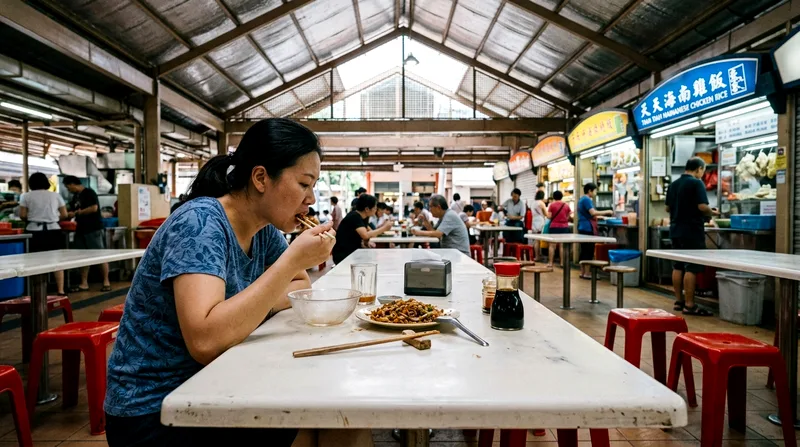
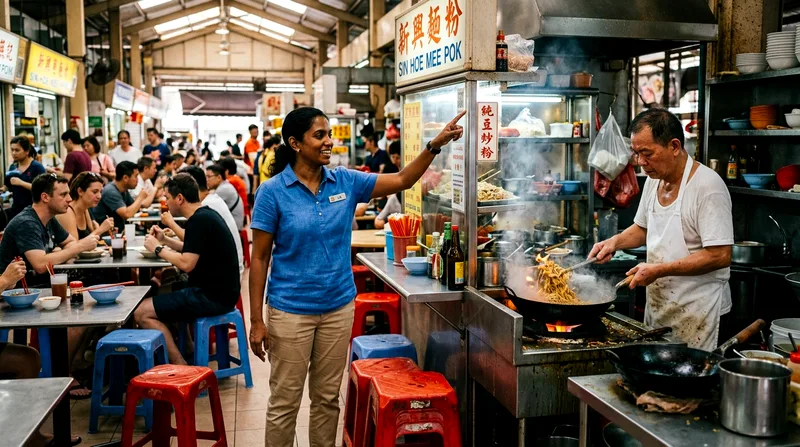
These run two to three hours, typically in small groups of six to twelve, and move between three to five stalls across one or two hawker centres — commonly Chinatown Complex, Maxwell, or Tiong Bahru Market. Expect tasting portions rather than full plates, since the goal is variety: a few spoonfuls of Michelin-starred soya sauce chicken rice, a small bowl of Bib Gourmand laksa, maybe a plate of carrot cake (chai tow kway). Cost typically sits in the moderate range per person since hawker food itself is cheap — you're mostly paying for the guide's access and knowledge, not the food. The downside: these tours are outdoors, un-air-conditioned, and involve real walking and standing, which doesn't suit everyone.
Fine dining Michelin restaurant experiences
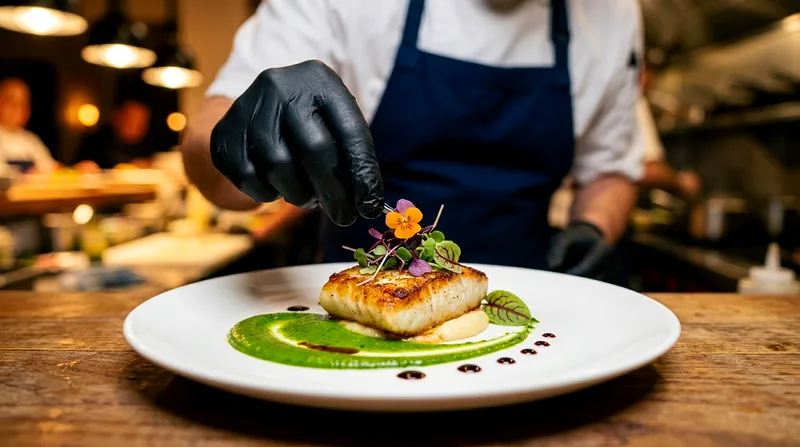
This category is really a curated dining reservation with concierge service rather than a "tour" in the walking sense. It usually means a guide or host arranges and accompanies you to a one- or two-starred restaurant around Marina Bay or Tanjong Pagar for a set tasting menu, sometimes with a translated explanation of each course. These run considerably higher in cost than hawker tours — multi-course tasting menus at starred restaurants in Singapore commonly run from roughly SGD 150 to over SGD 400 per person before wine, and that's before any tour markup. The value-add here is securing a table at a restaurant that's booked out weeks ahead, not food education. If you're comfortable booking restaurants directly, you may not need this category at all.
Mixed hawker and restaurant tours
Hybrid tours, usually four to six hours, pair two or three hawker stops with a sit-down meal at a Bib Gourmand or one-star restaurant. This is the category I'd point most first-timers toward — it covers the full spectrum of what makes Singapore's dining scene distinct, from a $4 plate at a hawker centre to a $60 tasting course, in one booking. The trade-off is time and cost: you're committing most of a day and paying a blended rate that sits between the two other categories. Couples and fashionistas who want both the photogenic plating of fine dining and the authenticity of street food tend to get the most out of this format.
What to Look for When Booking
Not all food tours labeled "Michelin" actually visit Michelin-recognized venues — some operators use the word loosely to describe any hawker tour. Always check the specific stalls or restaurants named in the itinerary against the current Michelin Guide Singapore list before paying.
Inclusions: tastings, beverages, and guide expertise
Confirm exactly what's covered. Most hawker tours include food tastings but not beverages beyond water or tea — alcohol, specialty drinks like sugarcane juice, or dessert stops are often extras. Ask whether the guide is a trained food specialist or a general city guide reading from a script; the better tours employ guides who've worked in food media, hospitality, or have personal ties to the hawker community, and it shows in the depth of commentary. For restaurant-based tours, check whether gratuity and service charge (typically 10% in Singapore) are included in the quoted price or added at the table.
Group size, cancellation policy, and dietary accommodations
Group size matters more on hawker tours than restaurant ones — a group larger than fifteen makes it hard to hear the guide over hawker centre noise and slows down ordering considerably. Look for groups capped around ten to twelve. On cancellation: most reputable food tour bookings allow free cancellation 24 to 48 hours in advance, but tours bundled with a fixed restaurant reservation often have stricter, non-refundable terms closer to the date, since the venue has already been paid. Dietary restrictions need advance notice — halal, vegetarian, and shellfish-allergy accommodations are generally manageable at hawker centres given the variety of stalls, but a fixed restaurant tasting menu is far less flexible and may require a full menu swap arranged days ahead.
Best Times to Book Your Tour
Timing affects both availability and how much you'll enjoy the experience — these are two separate questions worth answering before you book.
Advance booking windows and seasonal demand
Book hawker-based tours three to seven days ahead during most of the year — demand is steady but rarely sells out completely. Restaurant and hybrid tours tied to a specific Michelin-starred venue need more lead time, often two to three weeks, since you're really booking a restaurant reservation that the tour operator has to secure. Demand spikes around major Singapore events — the Formula 1 Singapore Grand Prix in September, Chinese New Year (January or February), and the year-end holiday period — when both hawker queues and restaurant bookings get noticeably harder to manage. If your trip falls in one of these windows, book your tour at least a month out.
Optimal times for comfort and availability
For comfort, morning tours (starting around 9 or 10am) beat afternoon ones — hawker centres get hot and crowded by midday, and Singapore's humidity makes walking tours after 1pm genuinely draining. Evening tours work better for restaurant-focused itineraries since that's when Michelin-starred kitchens run full service anyway. Avoid booking a hawker tour on a Monday if possible — some stalls, particularly family-run ones, close on rotating rest days, and your guide may have to substitute a less interesting stop.
Comparison: Tour Categories and Inclusions
Here's how the three main categories stack up against each other on the factors that actually affect your decision — duration, cost tier, and who they suit.
Hawker-only tours are the cheapest and most physically demanding, while restaurant-based experiences cost the most but require the least walking.
Singapore Michelin food tour categories compared by duration, cost, and best fit
| Tour Category | Typical Duration | Cost Tier | Setting | Best For |
|---|---|---|---|---|
| Michelin hawker stall tour | 2-3 hours | Low | Outdoor, un-air-conditioned | Food lovers, solo travelers, budget-conscious couples |
| Fine dining Michelin restaurant experience | 2-3 hours (single meal) | High | Indoor, air-conditioned, seated | Couples, special occasions, senior travelers |
| Hybrid hawker and restaurant tour | 4-6 hours | Mid to high | Mixed indoor/outdoor | First-time visitors, families with older kids, fashionistas |
Cost tiers and durations are typical ranges; always check current prices and inclusions before booking.
Frequently asked questions
What is the difference between Michelin stars and Bib Gourmand in Singapore?
Michelin stars (one, two, or three) recognize the highest culinary quality regardless of price, typically at formal restaurants. Bib Gourmand recognizes good quality, affordable food — generally capped around SGD 45 per person for a meal — which is why most Michelin-recognized hawker stalls fall under Bib Gourmand rather than starred status. A small number of hawker stalls, like Hill Street Tai Hwa Pork Noodle, have historically held a full Michelin star, which is rare globally.
Are Michelin hawker stall tours worth the cost?
If you value your time and want to avoid guesswork, yes — you're paying for queue navigation, stall selection, and cultural context, not the food itself, which stays cheap. If you're comfortable researching stalls on apps like the Michelin Guide website and standing in line yourself, you can replicate most of the experience solo for far less, minus the explanation.
Can I book a private Michelin food tour in Singapore?
Yes, private tours are widely offered alongside group options, usually at a noticeably higher per-person cost since you're covering the guide's full time rather than splitting it. Private tours make sense for families needing flexible pacing, couples wanting a customized route, or anyone with specific dietary needs that are easier to manage without a group.
What should I wear on a Michelin food tour?
Light, breathable clothing and closed-toe comfortable shoes for hawker-centre tours — Singapore's humidity and standing-heavy itineraries make this non-negotiable. For restaurant-based or hybrid tours ending in a fine dining component, smart casual works; most Michelin-starred restaurants in Singapore don't require a jacket but do discourage shorts, flip-flops, or sleeveless tops for men.
How far in advance should I book a Michelin dining tour?
Book hawker-focused tours three to seven days ahead in most periods. Book hybrid or restaurant-based tours two to three weeks out, since they depend on securing a table at a specific Michelin-recognized restaurant. During Chinese New Year, the September Grand Prix weekend, or December, push that to four weeks or more.