Comparing a Singapore food tour vs self guided hawker crawl? Weigh cost, variety, insider access, and effort to pick the right approach for you.
Options at a Glance
The Singapore food tour vs self guided hawker crawl question comes down to two very different ways of eating the same food. A guided tour hands you a route, a narrator, and a fixed number of tastings. A self-guided crawl hands you a map, an appetite, and the freedom to wreck your schedule in favor of a second plate of char kway teow.
Both paths lead through the same universe of hawker centres — Chinatown Complex, Maxwell Food Centre, Lau Pa Sat, Tiong Bahru Market, and the less touristy Bedok Hawker Centre out east. What changes is who decides where you sit, what you order, and how long you linger.
What a guided food tour includes
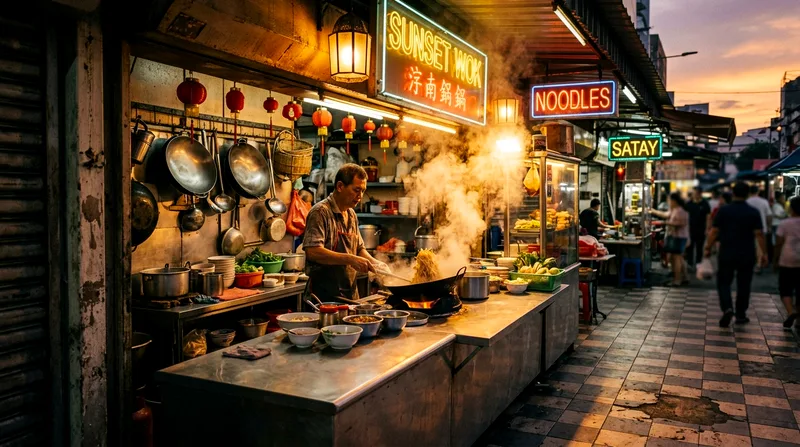
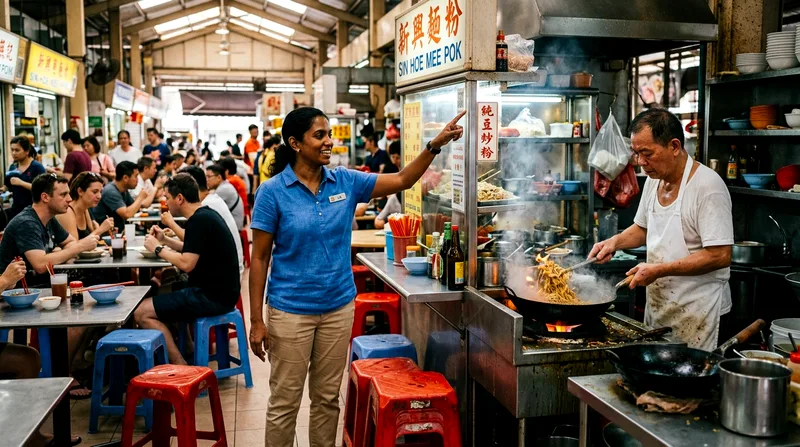
Most Singapore food tours run two to three hours, cover four to seven tasting stops, and move through one or two hawker centres plus maybe a wet market or shophouse street. A guide — often a local with some food or heritage training — explains dish origins, ordering etiquette, and the backstory of a stall's Michelin Bib Gourmand status if it has one. Group sizes typically run from four to twelve people. Transport between stops is usually on foot, since most itineraries stay within one neighborhood like Chinatown or Tiong Bahru. You're fed, but you're also herded, and that's the trade-off worth sitting with before you book.
What a self-guided crawl involves
A DIY hawker crawl means you pick two or three centres, plan a rough route by MRT or bus, and order as you go. No fixed stop count, no guide fee, no waiting for the slowest person in your group to finish photographing their soup. You'll need to research dish names in advance — or just point — and you'll be queuing, paying, and bussing your own tray at every stall. It's not hard, but it does require a bit of homework: knowing that Maxwell is famous for Tian Tian Hainanese chicken rice, or that Lau Pa Sat's satay street only lights up in the evening, saves you from wandering in blind.
Cost: Tour vs DIY
This is where the decision usually gets made. Is a food tour worth it in Singapore if you're watching your budget? For most solo travelers and couples, the honest answer is no — not on cost alone. The value of a tour is time saved and context gained, not money saved.
A guided tour costs roughly two to three times more than a DIY crawl but trades money for curated access and zero planning effort.
Singapore food tour vs self-guided hawker crawl compared
| Option | Typical cost (SGD) | Duration | Stops covered | Best for |
|---|---|---|---|---|
| Guided food tour | 70-140 per person | 2-3 hours | 4-7 tastings | First-timers, families, hands-off travelers |
| DIY crawl (2 centres) | 25-40 per person | 1.5-4 hours (flexible) | 3-5 full dishes | Solo travelers, couples, budget trips |
| DIY crawl (1 centre, quick visit) | 15-25 per person | 45-90 min | 2-3 dishes | Quick lunch stop, time-limited visitors |
| Private guided tour | 100-200+ per person | 2-3 hours | 4-6 tastings, custom route | Couples wanting flexibility with guidance |
Figures are typical ranges based on general market rates; check current prices and group sizes before booking.
Tour pricing and what's covered
Guided food tours in Singapore generally run in the range of SGD 70 to SGD 140 per person for a half-day experience, depending on group size, number of tastings, and whether it's a private or small-group format. That price usually bundles the food itself, the guide's commentary, and sometimes a drink or dessert stop. Compare current prices and group sizes before you book, since ranges shift with season and operator. Against a Bangkok street food tour (often cheaper, around USD 30-45) or a Kuala Lumpur night market walk, Singapore's guided tours sit on the pricier end of Southeast Asia — a reflection of higher stall prices and labor costs generally.
DIY budget breakdown
A self-guided crawl costs roughly what the food costs, plus transport. Hawker dishes in Singapore typically run SGD 3 to SGD 6 for noodles, rice dishes, or soups; a plate of chicken rice at Maxwell or Chinatown Complex rarely exceeds SGD 5. Budget SGD 25 to SGD 40 for a serious multi-stop crawl across two centres, covering four or five dishes plus drinks. Add SGD 5 to SGD 10 for MRT or bus fares between neighborhoods. That's often a third to half the cost of a guided tour for more total food. If you're traveling with kids, the DIY route also lets you skip stalls with long queues or unfamiliar textures without feeling like you're holding up a group.
Time and Effort Required
Effort is the hidden cost people forget to weigh. A tour removes almost all of it; a DIY crawl asks you to do some planning the night before.
Planning and logistics for each option
Booking a tour takes ten minutes online and zero research afterward — you show up, the rest is handled. Planning a self-guided singapore hawker crawl diy-style takes more legwork: checking which stalls at Chinatown Complex are open that day (many hawkers take rotating rest days), confirming Lau Pa Sat's satay stalls run in the evening only, and mapping MRT stops near Tiong Bahru Market or Bedok Hawker Centre. None of this is hard, but it's an extra 20-30 minutes of prep most tourists skip, then regret when they arrive to a half-shuttered centre.
Duration and pacing differences
Tours run on a clock — typically two to three hours, fixed stops, fixed order. You eat when the itinerary says eat. A DIY crawl can run 90 minutes or stretch across an entire afternoon with a nap break in between; you control pacing entirely. For families with young kids or senior travelers who tire faster, that flexibility matters more than the savings. For couples wanting an efficient, planned evening without decision fatigue, the tour's fixed pacing is actually the selling point, not a drawback.
Variety and Insider Access
This is the category where guided tours genuinely earn their fee — and where DIY travelers most often lose out without realizing it.
Underrated spots and local knowledge
A good guide knows which stall at Chinatown Complex has the three-hour weekend queue and which near-identical stall two rows over is just as good with no wait. They know Tiong Bahru Market's chwee kway stall opens early and sells out by 10am, or that Bedok Hawker Centre, away from the tourist core, serves a rougher, cheaper, more local version of the same dishes you'd pay double for near Chinatown. This is the kind of texture that takes locals years to accumulate and that the Singapore Tourism Board's own listings only hint at. Without that knowledge, a DIY crawler can easily spend an hour queuing for a stall that isn't actually the best one in the building.
Menu variety and tasting scope
Tours control portion size deliberately — small tastes across many stops, so you don't fill up on dish two of seven. DIY eaters tend to order full portions and max out at three or four dishes before they're done. If breadth matters more to you than fullness, the tour wins on variety per visit. If you'd rather eat two full, satisfying plates of laksa and chicken rice than seven small tastes, DIY serves you better and costs less doing it.
Crowds and Experience Quality
Hawker centres get loud, hot, and crowded at peak lunch (12-1:30pm) and dinner (6:30-8pm) hours — this affects both tour and DIY experiences, but differently.
Group dynamics on tours
Groups of eight to twelve strangers moving through a packed hawker centre create their own friction — you're often waiting for the group to regroup after each stop, and tables for twelve are hard to find at Maxwell during lunch rush. Guides generally book ahead or time visits around off-peak windows, which helps. But you lose the option to linger at a stall you loved or skip one that doesn't interest you.
Flexibility of solo exploration
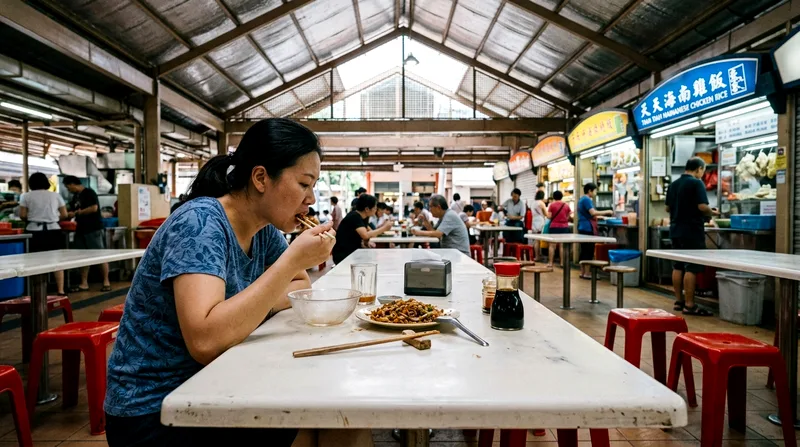
Solo diners move through hawker queues faster — single seats open up constantly even when tables for groups don't. If you're new to hawker centre etiquette, note the local norm of "chope-ing" a seat with a packet of tissues before ordering; it's accepted practice, not rude, and solo travelers use it constantly. Going alone also means you can retreat from an overwhelming stall without negotiating with a tour group, which matters more than people expect on a first visit.
Who Should Choose Which
Neither option is objectively better — they solve different problems. The best way to explore Singapore hawkers depends on how much you value guidance over control.
Best for first-time visitors
If you've never navigated a hawker centre, don't know how to order at a stall (pay at the counter, give a table or chope number, collect your own cutlery), or you're traveling with kids who need predictable timing, book a guided tour. It removes the two biggest first-time frustrations: language barriers at some older stalls and not knowing what's actually good. Families and senior travelers benefit most from the fixed pacing and seated-group logistics.
Best for independent travelers
If you're a solo traveler, a budget-conscious couple, or simply someone who likes wandering without a schedule, go DIY. Pick two centres in one evening — say Maxwell and Chinatown Complex, a 10-minute walk apart — and you'll eat better for less money with total control over what, where, and how much. Fashionistas and food-focused travelers who want photogenic dishes without a guide hovering nearby also do better solo, timing visits for good light around 5-6pm before dinner rush peaks.
Frequently asked questions
Is a food tour worth it in Singapore?
It's worth it if you value context and convenience over cost — guides explain dish history, manage queues, and pick reliably good stalls, saving you from wasted stops. It's less worth it if you're budget-conscious or already comfortable navigating crowded food courts, since you'll pay roughly double or triple what a DIY crawl costs for less total food.
Can you do a hawker crawl alone?
Yes, and it's one of the easiest solo food activities in Singapore. Hawker centres are well-lit, safe, and solo-diner friendly — single seats open up fast even during busy periods. Bring small cash denominations, know that "chope-ing" a seat with tissues is normal, and expect to pay at the counter before your food is made.
How much does a Singapore food tour cost?
Most small-group guided food tours cost between SGD 70 and SGD 140 per person for a two- to three-hour outing covering four to seven tastings. Private tours run higher, often SGD 100-200+ per person. Always check current pricing and inclusions when booking, since costs shift with group size and season.
What's the best way to explore hawker centres?
For a first visit, start with one well-known centre like Maxwell Food Centre or Chinatown Complex rather than trying to cover three in a day. Go between 10:30-11:30am or after 2pm to dodge peak lunch crowds, order one dish per stall, and share tables — it's expected, not awkward.
Do food tours include transportation between stalls?
Usually not formal transport — most tours stay within walking distance in one neighborhood, like Chinatown or Tiong Bahru, moving on foot between stalls and centres. If an itinerary spans two distant areas, check beforehand whether transport (MRT fare, walking, or a shuttle) is included or an added cost.