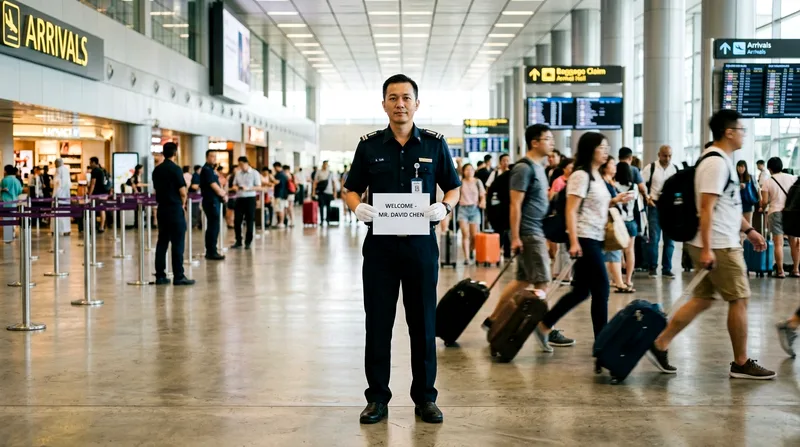
Changi Airport to City: Private Transfer vs MRT
Comparing Changi Airport to city transfer vs MRT? See real costs, travel times, luggage space, and crowd levels to pick the right option.
9 min read · 15 Oct 2026
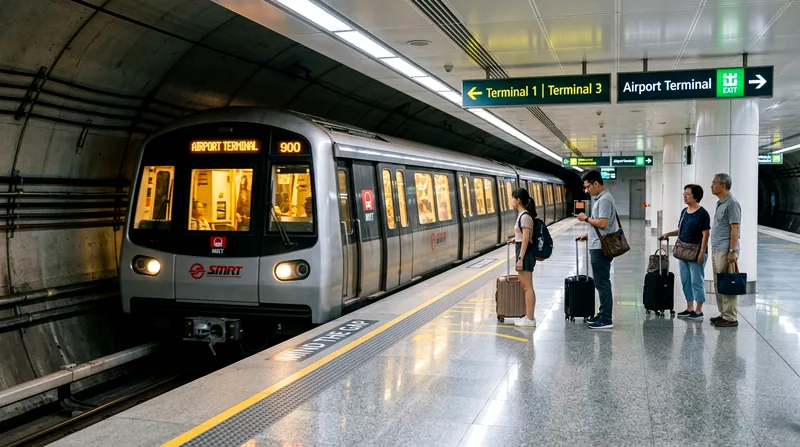
Singapore Airport Transfer Guide
Plan your Singapore airport transfer from Changi with MRT, taxi, Grab, and shuttle options compared, plus tourist transport card advice.
Changi Airport sits about 20 km from the Marina Bay area, and getting into town rarely takes more than 45 minutes regardless of which method you pick. The real decision is cost versus convenience, and your answer depends on luggage, arrival time, and how many people you're moving.
The MRT is the cheapest option by a wide margin — a fare to the city centre runs roughly SGD 2 to 2.50 — and trains from the airport station connect directly to the East West Line network. Taxis and ride-hailing apps cost more, typically SGD 25 to 40 depending on traffic and time of day, but they go door to door, which matters if you've got a stroller, two suitcases, and a toddler who's done with walking. Private transfer services sit at the top of the price range, often SGD 40 to 60 pre-booked, but you get a named driver, a fixed price agreed before you land, and no queueing.
I'd skip the shared shuttle buses that some hotels still advertise — they're slower than a taxi and rarely cheaper once you account for waiting time to fill the van. If you're landing after 11pm, pre-booking a private car is genuinely worth the premium; late-night taxi queues at Changi can stretch past 20 minutes, and MRT service tapers off before midnight.
The MRT is cheapest for light packers, while a pre-booked private transfer is the safer bet for late arrivals, families, or heavy luggage.
Singapore airport transfer options from Changi compared by cost and convenience
| Option | Approx. Cost (SGD) | Travel Time to City | Best For |
|---|---|---|---|
| MRT | 2-2.50 | 30-45 min | Light luggage, budget travelers |
| Public bus | 2-2.50 | 45-60 min | Budget travelers, no rush |
| Metered taxi | 25-40 | 25-35 min | Door-to-door, moderate luggage |
| Grab (ride-hailing) | 20-40 | 25-35 min | Flexibility, upfront pricing |
| Pre-booked private transfer | 40-60 | 25-35 min | Late arrivals, families, fixed pricing |
Typical fare ranges; actual costs vary with traffic, time of day, and surcharges, so check current prices before you book.
There's no dedicated "Airport Express" train in Singapore the way Hong Kong or Bangkok run theirs — the MRT line that serves Changi is simply part of the regular East West Line, which is actually a point in Singapore's favor since you're not paying a premium fare for a special service. Public buses also run from the airport (services 36 and a few others) to various parts of the city, taking longer than the MRT but costing about the same. Hotel shuttle services exist but are inconsistent — some properties near Orchard Road run them on a schedule, others don't bother because the MRT and taxis cover the route well enough.
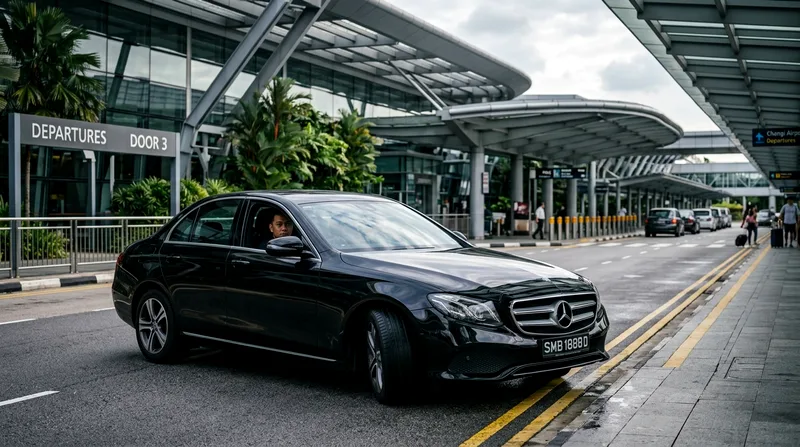
For a Changi Airport transfer booked ahead of arrival, you'll typically reserve through a private transfer or limousine service online, specifying flight number and terminal so the driver tracks delays. This is the sensible route for families, senior travelers who don't want to navigate signage after a long flight, or anyone arriving very late or very early. Grab, Singapore's dominant ride-hailing app, can also be booked from the arrivals hall the moment you land, though you'll queue at a designated pickup zone rather than curbside. Compare current prices and availability for airport transfers before you book — rates shift with demand and time of day.
Singapore's MRT is one of the easier metro systems in Asia for visitors to use cold, with English signage throughout and announcements in multiple languages. Compare this to Bangkok's BTS and MRT split system, which requires separate tickets for separate networks, or Jakarta's more limited single-line coverage — Singapore's network is more unified and far more extensive relative to the city's size.
The network has six main lines — North South, East West, Circle, Downtown, North East, and Thomson-East Coast — plus LRT feeder lines serving residential estates like Sengkang and Punggol. Marina Bay, the CBD, Orchard Road, and Chinatown all sit on multiple intersecting lines, so transfers between major tourist zones rarely take more than one change. Sentosa isn't on the MRT network directly; you connect via Harbourfront station and switch to the Sentosa Express monorail or a cable car. Stations are numbered and color-coded, which helps when station names start blurring together after a few days.
Trains run roughly 5:30am to midnight on most lines, with trains every 2 to 5 minutes during peak hours (7:30-9:30am and 5:30-7:30pm) and up to 8-10 minutes late evening. If your flight lands after midnight, the MRT won't be running and you'll need a taxi or private transfer regardless of budget. Peak hour trains get genuinely packed — not Tokyo-level crushed, but standing room only on the North South and East West lines through the CBD stretch. Avoid traveling with large luggage during peak hours if you can help it; the gates and platforms weren't built with suitcases in mind.
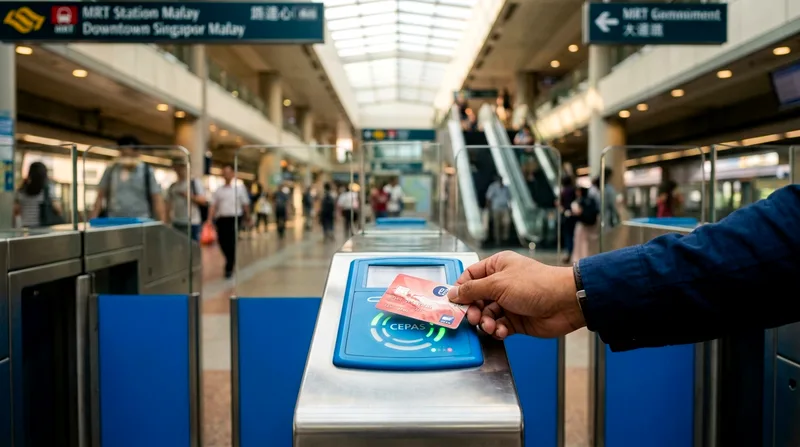
Every visitor asks the same question: do I need a card, or can I tap a credit card? Singapore's transit system now accepts contactless bank cards directly on MRT gates and buses, which genuinely simplifies things for short stays — no need to queue at a ticket machine on arrival. That said, a physical transport card still has advantages for families managing multiple travelers or anyone who prefers cash top-ups.
EZ-Link and NETS FlashPay are the two stored-value cards used across MRT, LRT, and buses, and both work identically for transit purposes — the difference mostly comes down to where you buy them and minor retail partnerships. You can buy and top up an EZ-Link card at MRT station ticketing machines, 7-Eleven outlets, and the EZ-Link counters at Changi Airport's arrival halls. Cards cost around SGD 10 (often including some stored value), and top-ups can be done in cash or via card at station machines. Hold onto the card for your whole trip — tapping a physical card is marginally faster through gates than fumbling with a bank card, and some older buses still read cards more reliably than contactless phones.
The Singapore Tourist Pass offers unlimited rides for set periods — typically 1, 2, or 3 days — with a refundable deposit on the card itself. Do the math before buying: at roughly SGD 2 to 2.50 per MRT ride, you'd need to take 5-6 trips a day to make a 1-day unlimited pass worth it over simply tapping a standard EZ-Link card per journey. Families sightseeing heavily across Sentosa, Marina Bay, and Chinatown in a single day might break even; most couples and solo travelers moving at a normal pace won't. The Singapore Tourism Board sells these passes at designated counters, including at Changi Airport.
Taxis in Singapore are metered, regulated, and reliable — a different experience from hailing a cab in Ho Chi Minh City or Bangkok, where negotiating or insisting on the meter is sometimes necessary. ComfortDelGro operates the largest fleet, and its taxis are easy to flag streetside outside peak hours or book via app. Fares include a base charge plus distance, with surcharges for airport pickup, peak hours, and late-night trips (midnight to 6am) — these surcharges catch first-timers off guard, so expect a higher final fare than the meter alone suggests.
Grab is the default ride-hailing app across Singapore and most of Southeast Asia, and it's worth downloading before you land since fares show upfront with no surprise surcharges beyond what's quoted. It's generally comparable in price to a metered taxi, sometimes slightly cheaper off-peak, sometimes pricier during surge periods like rainstorms or rush hour. One caution: Grab pickup at Changi requires going to a designated pickup point rather than curbside hailing, which adds a few minutes of walking that catches rushed travelers off guard.
For a fixed-price, no-surprises Changi Airport transfer, pre-booked car services let you lock in a rate before departure and skip both the taxi queue and surge pricing risk. This suits senior travelers, large families, and anyone arriving with connecting flight fatigue who just wants a driver holding a name sign at arrivals. It costs more than Grab on an average day, but on a day with heavy rain or a dead phone battery, that fixed booking looks like the smarter call. Check current prices and vehicle options for private transfers when you book your flights, since rates vary by vehicle size and distance to your hotel.
How you move around Singapore changes depending on which pocket of the island you're based in, and this matters more than most guides admit — a hotel near Orchard Road has completely different transport logistics than one near Sentosa or the Marina Bay waterfront.
Marina Bay Sands, the CBD, and the Gardens by the Bay cluster sit within walking distance of Bayfront and Downtown MRT stations, both served by multiple lines. This area is arguably the easiest in Singapore to explore without a car or constant taxi use — everything from Raffles Place to the Esplanade is a 10-15 minute walk or one MRT stop apart. If your hotel is here, you can realistically rely on walking and the MRT for 90% of your trip and only call a Grab for late-night returns or rainy days.
Sentosa requires a deliberate connection — there's no through MRT line, so you'll take the MRT to Harbourfront, then either walk across Sentosa Boardwalk (free, about 15 minutes), ride the Sentosa Express monorail (small fare, roughly SGD 4), or take the cable car from Mount Faber (a scenic but pricier option, mainly worth it for the view rather than as pure transport). Families with young kids often underestimate the walk between Sentosa's attractions once inside — the island is bigger than it looks on a map, and there's an internal shuttle bus system worth using rather than walking everything in Singapore's humidity.
The MRT is cheapest, costing roughly SGD 2 to 2.50 depending on your destination station, with the journey to the city centre taking about 30 to 45 minutes. Public buses cost similarly but take longer. If you're carrying heavy luggage or traveling with small children, the time saved by a taxi or Grab (SGD 20-40) is often worth the extra cost.
You don't need cash for MRT or buses — gates accept contactless bank cards, mobile wallets, and stored-value cards like EZ-Link, but not cash directly on buses or at MRT gates. Buying an EZ-Link or NETS FlashPay card is still useful if you'd rather not use your foreign bank card for every tap, since foreign transaction fees can add up over dozens of small rides.
Private transfer and car services let you reserve online before you fly, entering your flight number so the driver adjusts for delays and waits in the arrivals hall with a name sign. This is worth doing for late-night arrivals, large families, or senior travelers who'd rather skip queues. Compare current prices and vehicle options when you book your flights.
For most visitors, a standard EZ-Link card bought at the airport or any MRT station works better than the Singapore Tourist Pass unless you're taking five or more rides daily. The Tourist Pass's unlimited-ride value only pays off with heavy, all-day sightseeing across multiple districts.
MRT trains run roughly 5:30am to midnight, and bus services follow similar hours with some routes stopping earlier. If your flight lands after midnight, plan on a taxi, Grab, or pre-booked private transfer instead, since no public transport option will be running.
Comparing Changi Airport to city transfer vs MRT? See real costs, travel times, luggage space, and crowd levels to pick the right option.
9 min read · 15 Oct 2026
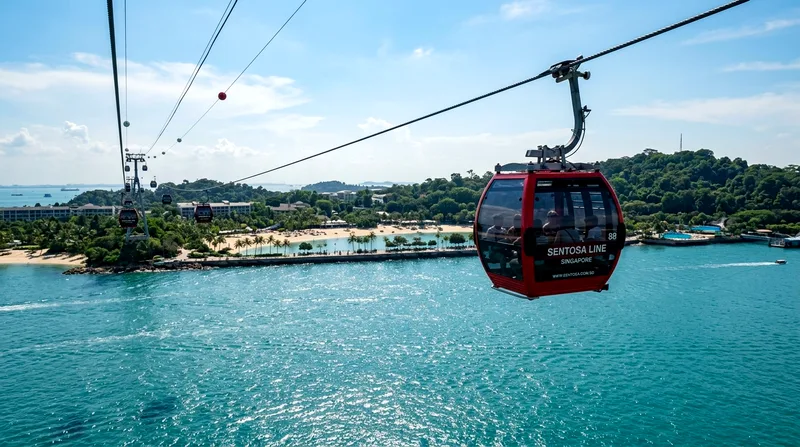
Compare cable car, monorail, and walking routes for how to get to Sentosa Island. Ticket prices, booking tips, and which option suits your trip.
10 min read · 15 Oct 2026
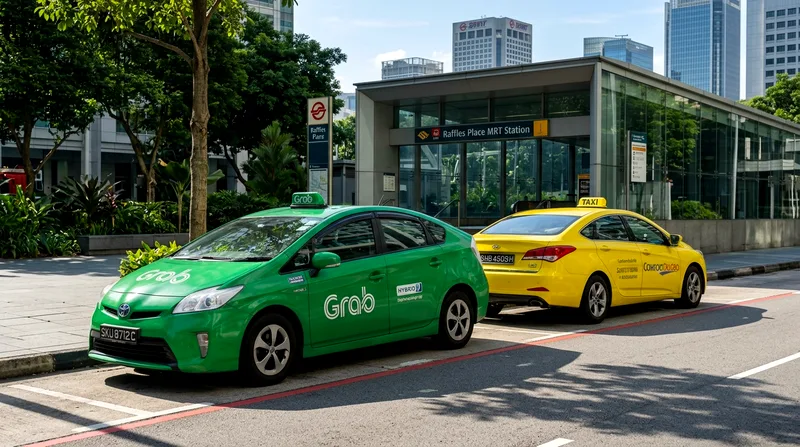
Compare Grab, taxis, and MRT in Singapore by cost, speed, and convenience. Find the best transport option for your route and travel style.
9 min read · 15 Oct 2026
Is the Singapore tourist pass worth it? Compare it against pay-as-you-go EZ-Link fares and find your personal break-even point before you buy.
9 min read · 15 Oct 2026
Planning a changi airport private transfer book guide: compare private cars, shuttles and limousines, pricing tiers, and how to reserve online.
9 min read · 15 Oct 2026