Is the Singapore tourist pass worth it? Compare it against pay-as-you-go EZ-Link fares and find your personal break-even point before you buy.
Where Your Money Goes
Before you decide whether the Singapore tourist pass is worth it, you need to know what you're actually comparing it against. Singapore's public transport runs on a distance-based fare system across the Singapore MRT network and Singapore Bus Service routes, both operated under fare rules set in coordination with the Singapore Tourism Board's visitor information channels and the transport regulator. Fares aren't flat — a short hop from Bugis to City Hall costs noticeably less than a longer ride from Changi Airport into town, and that distance sensitivity is exactly what makes the math around a tourist pass complicated rather than obvious.
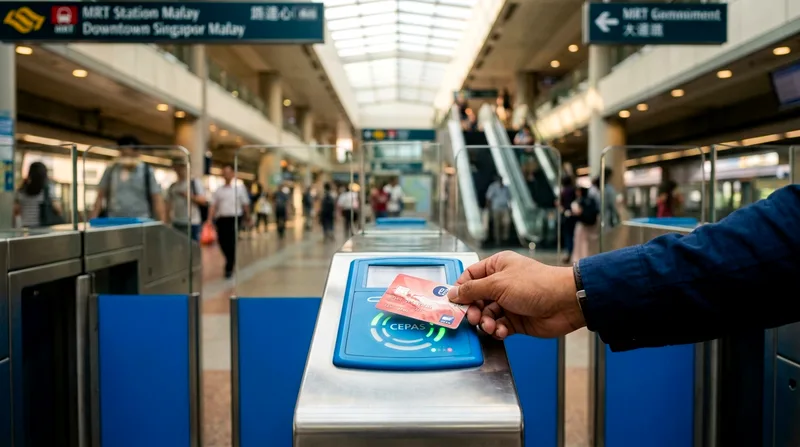
Most visitors default to one of two payment methods: an EZ-Link card (Singapore's rechargeable transit card, also usable for some retail purchases) or a contactless bank card tapped directly at gantries using PayWave or similar contactless payment. Both charge pay-as-you-go distance-based fares with small card-based discounts versus buying single paper tickets, which barely exist anymore anyway. The Tourist Pass, by contrast, is a separate unlimited-ride product sold specifically to visitors, valid for a fixed number of consecutive days on both MRT and buses.
Pass cost and validity period
The Tourist Pass is typically sold in 1-day, 2-day, and 3-day versions, each priced as a flat fee plus a refundable deposit on the card itself (refunded when you return the card within a set window, usually five days of purchase, at a designated return point). The daily cost works out higher than what most pay-as-you-go travelers spend per day — that's the trade-off for not having to calculate fares or worry about running low on stored value. Validity runs on calendar days from first use, not 24-hour blocks, so a 2-day pass activated at 6pm still expires at the end of day two, not 48 hours later. That detail catches people out more than almost anything else about the pass.
Daily transport costs breakdown
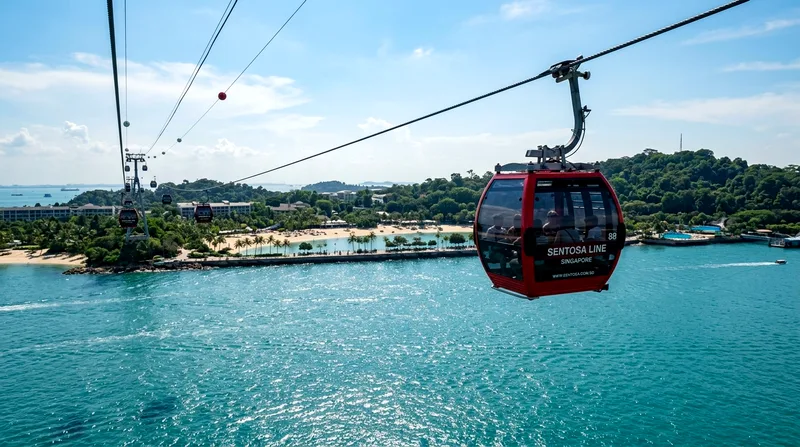
A realistic day of sightseeing — say, hotel to Orchard Road, Orchard Road to Marina Bay, Marina Bay to Sentosa Island (via the Sentosa Express or bus-linked route), then back to the hotel — usually totals four to six rides. Each MRT ride in the central tourist zone tends to cost a modest sum, and buses are generally cheaper per ride than MRT for short distances. Add them up and a dense day of movement can approach, but rarely exceeds, the daily-equivalent cost of the pass unless you're constantly criss-crossing the island. A lighter day — two or three rides, with walking filling the gaps — comes in well under the pass price, every time.
Pay-as-You-Go vs Tourist Pass
This is the core decision, and it's not close to as simple as "unlimited travel always wins." Unlimited-ride passes make sense when your per-ride cost times your number of rides exceeds the flat pass price. In Singapore, because individual fares are already low by international standards — cheaper per ride than Hong Kong's Octopus-zoned MTR fares and far cheaper than a Bangkok BTS day pass relative to typical tourist movement patterns — the unlimited pass has a higher bar to clear than it would in, say, a European city with expensive flat-fare metros.
The Tourist Pass only beats pay-as-you-go once your daily ride count climbs past roughly five to seven trips.
Singapore tourist pass vs pay-as-you-go: cost and fit by trip length
| Option | Daily ride count needed | Best trip length | Group-friendly | Hassle level |
|---|---|---|---|---|
| 1-Day Tourist Pass | 6+ rides in one day | Single packed day (e.g. airport arrival day) | No, one pass per person | Low once activated |
| 2-Day Tourist Pass | 5-6 rides per day average | Short dense trip, 2 days | No | Low |
| 3-Day Tourist Pass | 5+ rides per day average | Standard first-time visit | No | Low |
| EZ-Link pay-as-you-go | Any count, no minimum | Any trip length, relaxed pace | Yes, one card per rider still | Medium, requires top-ups |
| Contactless bank card (PayWave) | Any count, no minimum | Any trip length | Yes, each card independent | Lowest, no setup |
Ride counts are approximate planning guides based on typical fare-to-pass price ratios; check current fares and pass prices before you travel.
Break-even calculation by trip length
Here's the practical way to think about it, without pinning yourself to numbers that change: work out your average single-ride fare (roughly the same for most short-to-medium MRT hops in the tourist core), then divide the pass's daily-equivalent price by that fare. The result is your break-even ride count — the number of trips you'd need to take in a day to make the pass cheaper than paying per ride. For most travelers, that number lands somewhere between five and seven rides per day. A family of four doing five rides each would each need to hit that count individually, since passes aren't shareable — each pass is tied to one card for one person. That's a detail families often miss, assuming one pass can cover a group the way a day-pass attraction ticket might.
Scenarios where each option wins
The pass wins clearly on days with heavy point-to-point movement: Changi Airport to downtown, then multiple neighborhood hops (Chinatown, Little India, Kampong Glam, back to Marina Bay) crammed into one day. It also wins for travelers who hate topping up cards or doing fare math — the mental overhead has value even if the dollar savings are marginal. Pay-as-you-go wins for anyone doing a relaxed trip with two or three attractions a day and plenty of walking, which describes a lot of Marina Bay / Orchard Road itineraries where distances between major sights are short. It also wins if you already have a contactless debit or credit card, since tapping in and out avoids the EZ-Link top-up hassle entirely and charges you the exact pay-as-you-go fare with no card deposit to track down later.
Best Times to Buy the Pass
Timing matters more than people expect, and it's not about seasonal pricing — Singapore's transport fares don't fluctuate with tourist season the way flights or hotels do. It's about matching the pass to the right days of your itinerary rather than your whole trip.
Advance purchase and timing
You can't really "pre-book" the Tourist Pass the way you'd book a timed attraction ticket — it's activated on first tap, not on a scheduled date — so there's no early-bird saving to chase. What you can do is decide in advance which specific days warrant it. If your trip is five days long but only two of those days involve heavy multi-stop sightseeing (the rest being a day trip to Sentosa with minimal transit, or a slow morning at a single mall), buy a 1-day or 2-day pass just for the busy days and use EZ-Link or contactless tap-in for the rest. Mixing methods across a trip is completely normal and often the cheapest overall approach, even though it takes a bit more planning than buying one pass for the whole stay.
Seasonal and off-peak considerations
Fares in Singapore do have peak and off-peak pricing on the MRT, with slightly reduced fares for travel completing before the morning peak window. That's a minor factor for tourists, since most sightseeing happens mid-morning onward, but it does mean an early airport transfer before the morning rush can cost marginally less than the same ride an hour later. It's not enough to build a strategy around, but worth knowing if you're an early riser heading from Changi Airport into the city before 7:45am.
What Not to Skimp On
Saving money on transport shouldn't mean making your trip harder than it needs to be. There are a couple of places where cutting corners costs you more in frustration than it saves in dollars.
Essential transport vs optional attractions
Don't confuse the Tourist Pass with an attractions pass — it covers MRT and bus rides only, not entry to Gardens by the Bay, Universal Studios Singapore, or the Singapore Flyer. Some combo products bundle transport with attraction discounts, but the plain Tourist Pass is transit-only. If you're trying to save on the whole trip, look at attraction bundles separately rather than assuming the transport pass stretches further than it does. Also don't skimp on legitimate payment methods — buying a secondhand or informally resold EZ-Link card from an unofficial seller to save a small deposit fee isn't worth the risk of a card with no stored value verification.
When to pay extra for convenience
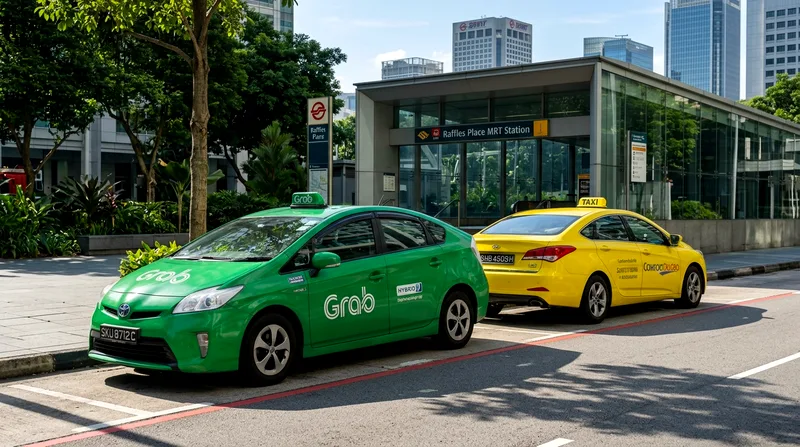
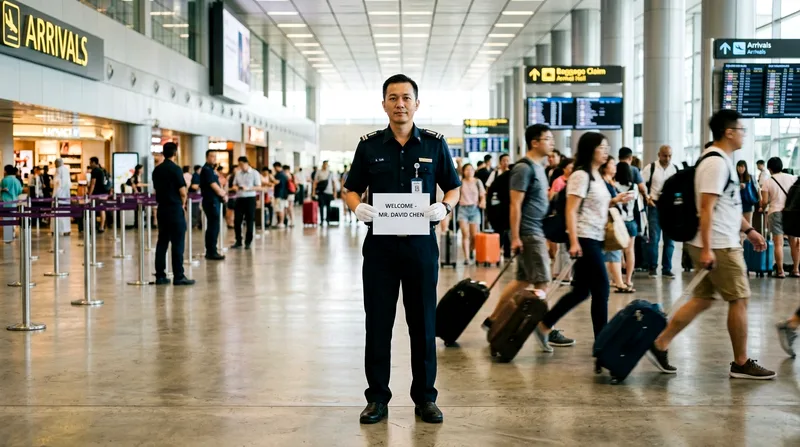
If you're traveling with young kids, elderly parents, or heavy luggage straight from Changi Airport, it's sometimes worth taking a taxi or ride-hail for that specific leg even if the MRT is cheaper — the Changi Airport MRT station involves walking and stairs that aren't ideal with four suitcases. Spending a bit more there to arrive relaxed is a reasonable trade, and it doesn't undermine your transport budget for the rest of the trip, which can still run on MRT and buses once you're settled.
Booking and Purchase Checklist
Buying the pass is straightforward, but a few steps are easy to get wrong, especially on a jet-lagged arrival day.
Where and how to buy
The Tourist Pass is sold at selected MRT station counters (including Changi Airport's station), at Tourist Information Centre locations run in connection with the Singapore Tourism Board, and sometimes through official transport operator ticket offices. It is not loaded onto your phone or bank card — it's a separate physical card, so you'll be carrying one more item alongside your regular wallet cards. Bring small local currency or a card for the purchase plus the refundable deposit, and ask directly whether the counter you're at issues the pass, since not every MRT station counter stocks it.
Verification before travel
Check the activation date matches the day you'll actually start using it — a pass bought a day early but not activated until the next morning still counts its validity from first tap, not purchase date, which protects you if you buy it the evening before a busy day. Confirm the deposit return process and window before you leave the counter, since missing the return deadline means forfeiting a deposit that's otherwise fully refundable. And double check it covers both MRT and Singapore Bus Service routes you intend to use — nearly all public buses are included, but confirm if your itinerary relies on any night-only or limited routes.
Frequently asked questions
Is the Singapore Tourist Pass worth buying for a 3-day trip?
It depends on daily ride density, not trip length alone. If each of your three days includes five or more MRT/bus rides — airport transfer plus multiple neighborhood stops — the 3-day pass likely breaks even or saves a little. If your three days are more relaxed, with two or three rides a day and lots of walking around Marina Bay or Orchard Road, pay-as-you-go with EZ-Link or a contactless card will cost less overall.
How much does the Tourist Pass cost compared to daily fares?
The pass charges a flat daily-equivalent rate that's higher than what a light pay-as-you-go day typically costs, but potentially lower than a day with six-plus rides. Exact prices shift periodically, so check current Tourist Pass pricing against typical single-ride MRT and bus fares before you commit — the gap is usually narrow enough that itinerary density matters more than the sticker price.
Can I use the Tourist Pass on all MRT lines and buses?
Yes, it covers all standard MRT lines and the great majority of Singapore Bus Service routes. It does not cover the Sentosa Express monorail in all cases or certain private shuttle services, so confirm coverage for Sentosa Island transport specifically if that's central to your plans.
Where can I buy the Singapore Tourist Pass?
Buy it at designated MRT station counters, including at Changi Airport, or at Tourist Information Centre locations linked to the Singapore Tourism Board. It's sold as a physical card with a refundable deposit, not as a digital pass, so you pick it up in person rather than ordering online for home delivery.
What's the break-even point for the Tourist Pass?
Roughly five to seven rides per day, depending on the exact fares for the specific MRT and bus trips you're taking. Divide the pass's daily-equivalent cost by your typical single-ride fare to get a personalized number — below that ride count, pay-as-you-go wins; above it, the pass starts saving you money.