Compare Grab, taxis, and MRT in Singapore by cost, speed, and convenience. Find the best transport option for your route and travel style.
The Three Options at a Glance
Singapore gives you three solid ways to get around, and the right answer changes depending on the trip. This singapore grab vs taxi vs mrt question comes up constantly because, unlike in Bangkok or Jakarta where traffic makes ride-hailing a gamble, Singapore's small size and efficient transit mean all three options are genuinely competitive most of the time.
The short version: MRT is cheapest and fastest for station-to-station trips, Grab wins for door-to-door convenience and odd hours, and taxis are a reasonable middle ground when you want a car but Grab is surging. None of them is a bad choice outright — but each has a scenario where it clearly loses.
What Grab Offers
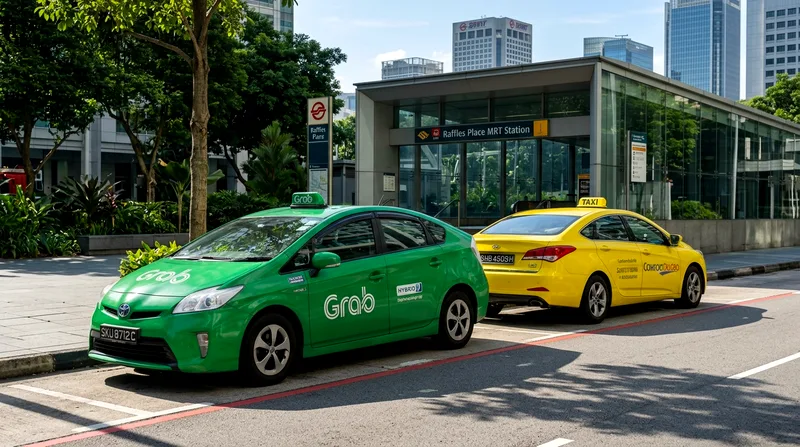
Grab is the dominant ride-hailing app in Singapore, and it works the way Uber does elsewhere — book through the app, see a fare estimate before confirming, and get picked up at a pinned location. Fares are dynamic, meaning they rise during rain, rush hour, or big events at venues like Marina Bay Sands. A typical ride from Orchard Road to the CBD, roughly 4-5km, runs somewhere in the SGD 10-18 range depending on demand, while the same trip on a clear off-peak afternoon might land near the lower end. The app accepts credit cards and various e-wallets, so you rarely need cash. Watch out for surge multipliers during thunderstorms, which hit Singapore most afternoons — fares can jump 1.5x to 2x with little warning.
What Taxis Offer
Street-hail taxis and taxi apps like ComfortDelGro's booking service run on metered fares plus a base flag-down charge, typically SGD 3.90-4.80 depending on the operator, plus distance and time surcharges. Taxis also add peak-period surcharges, midnight surcharges (usually 25% from midnight to 6am), and location surcharges for pickups from Changi Airport or Marina Bay Sands. The advantage is that taxis can be hailed on the street without an app, which matters if your phone battery dies or you're not comfortable with ride-hailing apps — a real consideration for some senior travelers. The downside is unpredictability: you won't know the exact fare until you arrive, unlike Grab's upfront pricing.
What MRT Offers
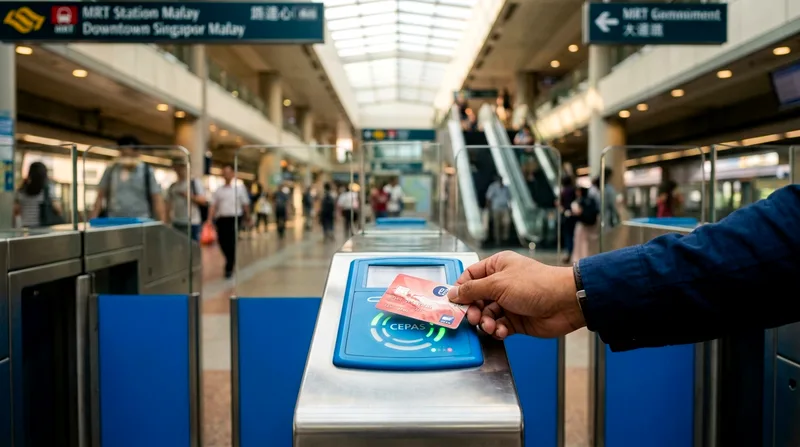
The MRT network covers most of what tourists actually want to see — Orchard Road, Marina Bay, Chinatown, Little India, Bugis — with trains running roughly every 3-7 minutes depending on the line and time of day. Fares are distance-based and almost always under SGD 2.50 for a single trip, paid via an EZ-Link card, a contactless bank card, or the SimplyGo system tapped directly at gates. The LRT feeder lines extend reach into residential estates, and buses fill in the gaps the MRT doesn't reach, including some routes to Sentosa Island (though Sentosa itself requires the separate Sentosa Express monorail or a shuttle bus). The catch is obvious: you're walking to and from stations, which is fine in aircon comfort but miserable in a downpour with suitcases.
Cost Comparison Across Routes
Cost is where the three options separate most clearly, and distance matters more than people expect. A flat "Grab is always pricier" rule doesn't hold — on very short trips, the gap narrows because MRT fares have a minimum charge too, and the walk to a station might not be worth the savings.
MRT is consistently cheapest, but Grab and taxis save real time on airport and luggage-heavy routes.
Singapore Grab vs Taxi vs MRT fare and time comparison by route
| Route | Grab (approx. SGD) | Taxi (approx. SGD) | MRT (approx. SGD) | MRT Travel Time (min) |
|---|---|---|---|---|
| Orchard Road to CBD (~4km) | 10-18 | 9-16 | 1-1.50 | 15-20 |
| Bugis to Sentosa Gateway (~10km) | 15-25 | 14-24 | 2-2.50 | 25-35 |
| Changi Airport to Orchard (~20km) | 25-45 | 28-48 | 2-2.50 | 45-60 |
| Marina Bay Sands to Chinatown (~3km) | 8-14 | 8-13 | 1-1.50 | 10-15 |
Approximate figures; Grab and taxi fares vary with surge pricing, time of day, and weather, so check current prices in-app before you book.
Short Trips Under 5km
For anything under 5km — say, Orchard Road to the Botanic Gardens — MRT fares sit around SGD 1-1.50, Grab typically runs SGD 6-12 depending on surge, and a metered taxi lands somewhere similar to Grab, maybe slightly less off-peak. If the station is a 10-minute walk from your hotel in Singapore's heat and humidity, many travelers reasonably pay the Grab premium just to skip the walk. This is the one distance band where the "cheapest" option isn't always the smartest one.
Medium Trips 5–15km
This is where MRT pulls decisively ahead. A 10km trip, like Bugis to Sentosa Gateway, costs under SGD 2.50 on the train versus SGD 15-25 on Grab or a taxi, more during surge or peak traffic. If your itinerary includes multiple medium-distance hops in a day — common for families bouncing between Gardens by the Bay, Chinatown, and Marina Bay Sands — the savings compound fast. Three or four such trips a day can mean the difference between SGD 10 and SGD 80 in transport costs.
Long Trips Over 15km
Airport runs fall here. Changi Airport to a hotel near Orchard Road, around 20km, costs roughly SGD 25-45 on Grab or taxi depending on time of day and surcharges, versus about SGD 2-2.50 on the MRT (the airport has its own station on the East-West Line). The train takes 45-60 minutes with a transfer; a car takes 25-35 minutes depending on traffic. For a solo traveler with one bag, the MRT is an easy win. For a family with four suitcases and tired kids after a long-haul flight, paying for a Grab or taxi is the better call even at triple the price.
Speed and Convenience Head-to-Head
Speed isn't just about travel time — it's about total door-to-door time including waiting, walking, and booking. The MRT wins on scheduled reliability; Grab wins on reducing walking; taxis sit in between, dependent on whether you're hailing on the street or booking ahead.
Peak vs Off-Peak Times
Weekday mornings (7:30-9:30am) and evenings (5:30-7:30pm) are rough for road transport — the Pan Island Expressway and Orchard Road area both slow down, and Grab surge pricing kicks in hard because everyone's booking at once. The MRT, meanwhile, keeps the same frequency but gets uncomfortably packed on lines like the North-South and East-West during these windows. Off-peak, say 10am-4pm or after 8pm, Grab prices normalize and traffic eases, making road transport the more pleasant choice. If you're commuting into the CBD at 8:30am, the MRT is still faster than sitting in traffic, even standing room only.
Door-to-Door vs Station-Based
Grab and taxis drop you at the entrance. MRT drops you at a station, which might be attached to a mall (common in Singapore — Somerset, Raffles Place, and Dhoby Ghaut all connect directly to shopping complexes) or might leave you a 10-15 minute walk from your actual destination. Google Maps and the MRT's own signage are reliable for this, but factor in the walk when comparing total time, not just the ride itself. For a trip that looks "faster" on MRT by schedule alone, the walking buffer can erase that advantage entirely.
Crowds, Comfort, and Effort
Comfort is subjective, but there are consistent patterns. MRT carriages are air-conditioned and clean by any regional standard — cleaner than Bangkok's BTS in my assessment of general upkeep, though comparably efficient — but peak-hour crowding means you're standing, pressed against strangers, for 20-30 minutes. Grab and taxis give you a private seat and aircon on your terms, at a price.
Luggage and Accessibility
Most MRT stations have lifts and are stroller- and wheelchair-accessible, a point Singapore Tourism Board actively promotes, but navigating gates and platform gaps with two large suitcases during rush hour is genuinely unpleasant. Grab and taxis handle luggage without friction — trunk space is rarely an issue unless you're traveling with golf clubs or oversized bags, in which case request a larger vehicle category in the Grab app. For families with young kids and a stroller, or senior travelers with mobility concerns, the extra cost of Grab is usually worth it for airport transfers and multi-bag days.
Weather and Waiting Time
Singapore's tropical downpours arrive fast and hard, often in the afternoon. Waiting for a Grab during a storm means watching the ETA climb as surge pricing kicks in and drivers go offline. Taxis face the same squeeze. The MRT is immune to weather entirely — trains run on schedule regardless of what's happening outside — which makes it the dependable choice when the sky turns dark, even if it means a damp five-minute walk to the station entrance.
Who Should Use Which Option
There's no universal winner in the grab vs taxi singapore vs mrt vs grab singapore debate — it depends entirely on who's traveling and why.
Best for Tourists
First-time visitors sticking to central districts — Marina Bay, Orchard Road, Chinatown, Bugis — should lean on the MRT for 80% of trips and save Grab for late nights, airport transfers, or rainy days. It's cheaper than relying on taxis the way you might in Kuala Lumpur, and the signage is in English with clear maps at every station, so the learning curve is maybe one trip long.
Best for Budget Travelers
If you're tracking every dollar, the MRT and bus network combined will cover nearly everything you need for under SGD 10 a day with an EZ-Link or SimplyGo tap-in card. Compare that to Bali or Phuket, where you might rent a scooter for freedom; in Singapore, the transit system is dense enough that owning wheels isn't necessary, and Grab should be reserved for genuine emergencies or very late nights when trains have stopped (MRT typically runs until around midnight to 1am).
Best for Peak-Hour Commutes
If you have a fixed appointment — a dinner reservation, a show, a flight — during weekday rush hour, the MRT's predictability beats a Grab stuck in traffic nine times out of ten. Build in a 10-minute walking buffer and you'll arrive on time more reliably than gambling on road traffic near the CBD or along the PIE during the evening crawl.
Frequently asked questions
Is Grab cheaper than taxis in Singapore?
Not reliably — they're usually within a few dollars of each other for the same trip. Grab shows you the fare upfront, which taxis don't, but during surge periods Grab can actually cost more than a metered taxi. Compare both in-app or by estimate before deciding, especially during rain or rush hour.
Can you use MRT to reach Changi Airport?
Yes. Changi Airport has its own MRT station on the East-West Line, connecting directly to the city center in roughly 45-60 minutes depending on your final stop and transfers. It's the cheapest airport transfer option by far, though it's less practical with heavy luggage or late-night arrivals after trains stop running.
Which transport is fastest during rush hour?
The MRT, almost always. Road traffic around the CBD and along major expressways slows considerably between 7:30-9:30am and 5:30-7:30pm, while train frequency stays constant. You'll stand for part of the ride, but you'll arrive on schedule rather than stuck behind traffic.
Do you need cash for MRT or Grab?
No. MRT accepts EZ-Link cards, SimplyGo-enabled bank cards, and tapping a contactless credit card directly at the gate. Grab runs entirely through the app with linked cards or e-wallets. Taxis are the one option where carrying some cash as backup still makes sense, since not all drivers accept every card type.
Is it safe to take Grab late at night?
Generally yes — Singapore has low crime rates and Grab trips are tracked with driver details, trip sharing, and in-app support. It's a safer and often more practical choice than waiting at an MRT station after service hours, which typically end around midnight to 1am depending on the line.