Comparing Changi Airport to city transfer vs MRT? See real costs, travel times, luggage space, and crowd levels to pick the right option.
Quick comparison: transfer vs MRT
Changi Airport to city transfer vs MRT isn't really a close call for every traveler — it depends heavily on what you're carrying and when you land. The MRT (via the Circle Line/East West Line connection) gets you from Changi to Raffles Place in about 50-55 minutes and costs roughly SGD 2-3 per person. A private transfer costs anywhere from SGD 35-60 for a standard sedan into the city, more for a van, but gets you door-to-door in 25-35 minutes depending on traffic and which part of town you're headed to.
I'd lean MRT for most solo trips and short couple getaways where bags are manageable. I'd lean transfer for families, anyone landing after the trains thin out, or trips where the first stop is Sentosa or somewhere the MRT doesn't reach directly. Neither choice is wrong — but booking blind without comparing both against your actual itinerary is the mistake to avoid.
A private transfer costs roughly 15-20 times more than the MRT but saves 15-25 minutes and removes all luggage hassle.
Changi Airport to city transfer vs MRT: cost, time and comfort compared
| Option | Typical cost (SGD, per person) | Journey time (door-to-door) | Luggage ease | Late-night availability |
|---|---|---|---|---|
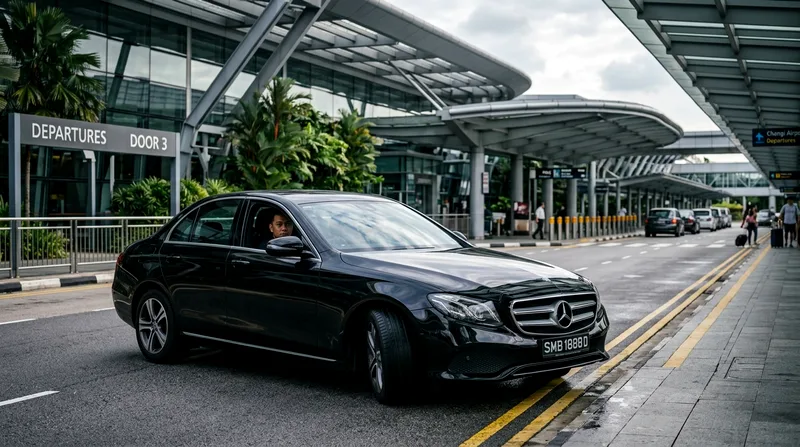
| Private transfer (sedan) | 35-45 | 25-35 min | Easy, driver handles bags | Yes, 24/7 |
| Private transfer (van, 4-6 pax) | 50-70 total | 25-40 min | Easy, ample space | Yes, 24/7 |
| MRT to Raffles Place | 2-3 | 50-55 min | Manage your own bags, stairs | Limited after ~11:30pm |
| MRT to Orchard Road | 2.50-3.50 | 60-65 min | Manage your own bags, one transfer | Limited after ~11:30pm |
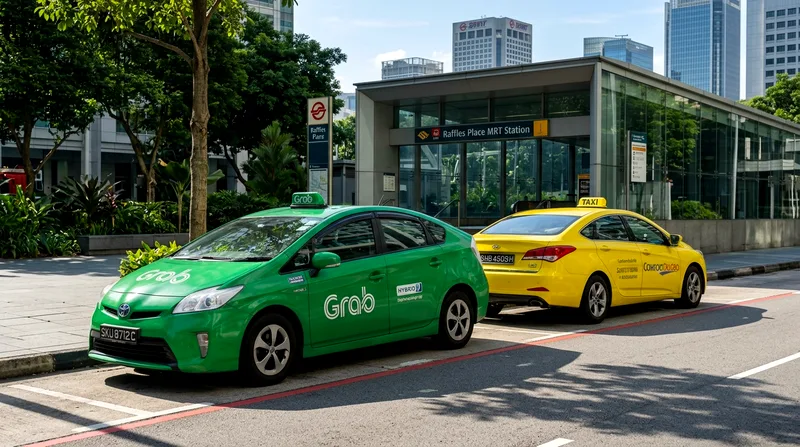
| Metered taxi | 25-40 | 30-40 min | Easy, driver handles bags | Yes, surcharges apply |
Figures are typical ranges; actual fares depend on traffic, time of day, and surcharges, so check current prices when booking.
What each option includes
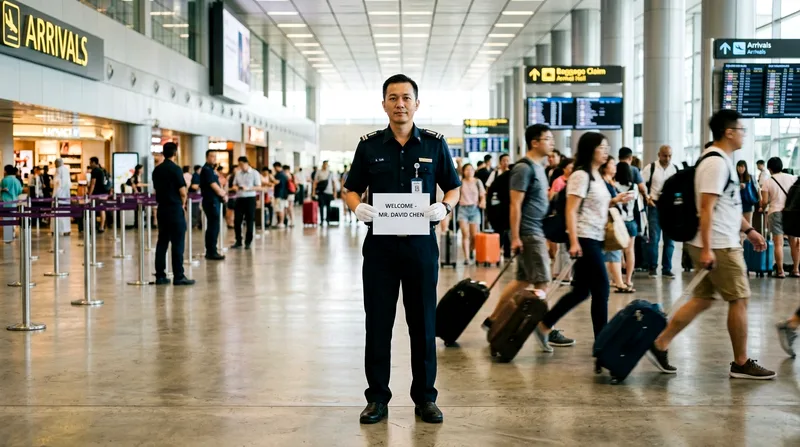
A private transfer booked through an airport transfer platform typically includes a dedicated vehicle, a driver meeting you at arrivals (sometimes with a name board), and a fixed price agreed before you land — no meter, no surge pricing. Some include 15-30 minutes of free waiting time if your flight is delayed, which matters more than it sounds given Changi's immigration queues can run long during peak arrival banks.
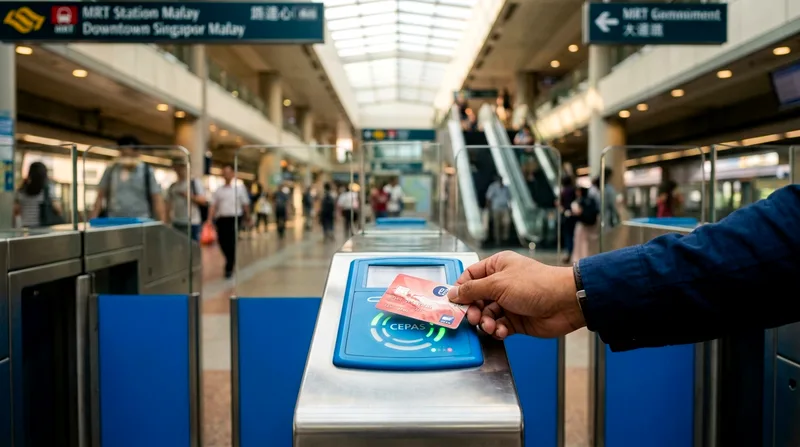
The MRT includes nothing beyond the ride itself. You buy an EZ-Link card or use contactless payment at the gantry, walk to the platform at Changi Airport MRT station, and that's it — no reservation, no driver contact, no flexibility if your flight lands three hours late and the one you'd planned around doesn't matter anymore because the MRT runs on a fixed daily schedule, not your itinerary.
Best for different traveler types
Backpackers and solo travelers on tight budgets should default to MRT unless landing very late. Families with two or more suitcases per person, senior travelers who struggle with stairs and transfers at Tanah Merah station, and anyone heading straight to Sentosa or a hotel near East Coast Park will find a transfer worth the premium. Couples are the swing group — if you're both carrying carry-on only, MRT works fine; check-in luggage for a two-week trip tips the scale toward a transfer.
Cost: what you'll actually pay
The honest answer to "airport to city Singapore cheapest" is almost always the MRT — but the real comparison needs to include the hidden costs each option carries, not just the headline fare.
Private transfer pricing
A standard sedan transfer from Changi to Marina Bay, Orchard, or Bugis generally runs SGD 35-45 booked in advance through an airport transfer platform. Larger vehicles for groups of four to six run SGD 50-70 total, which actually beats the MRT on a per-person basis once you're splitting between four people — worth doing the math before assuming trains always win. Prices rise for late-night pickups (after midnight) and for destinations further out like Jurong, where distance adds 15-20 minutes and a higher flat rate. Avoid unlicensed touts offering "cheap taxi" outside the arrival hall — stick to counters inside the terminal or pre-booked transfers; unmetered street deals at Changi are a known way to overpay.
MRT fares and passes
A single MRT journey from Changi Airport to the city center costs roughly SGD 2-3 using an EZ-Link card or contactless bank card — among the cheapest airport-to-city links of any major Asian hub. If you're staying multiple days, a Singapore Tourist Pass (unlimited rides, options for 1, 2, or 3 days, priced roughly SGD 10-20 depending on duration and deposit) often pays for itself by day two if you're using the MRT to reach Sentosa, Bugis, or Raffles Place repeatedly. Compare that to Bangkok's airport rail link or Kuala Lumpur's KLIA Ekspres, both of which cost more than Singapore's flat MRT fare for a comparable distance — Singapore's transit pricing is genuinely a bargain by regional standards.
Travel time and convenience
Changi to Marina Bay transport by car takes 20-30 minutes with light traffic; the same trip by MRT takes closer to 50 minutes once you include the walk to the platform and a transfer at Tanah Merah. That 20-30 minute gap is the real price of convenience — decide if it's worth the fare difference for your trip.
Door-to-door vs station-to-station
A transfer takes you from the arrival curb to your hotel lobby. The MRT takes you to a station, which might be a 5-10 minute walk or a short taxi ride from your actual hotel — add that to your time estimate, especially around Orchard Road where several hotels sit a block or more from the nearest exit. For Sentosa, neither option drops you directly at your resort; MRT riders need to switch to the Sentosa Express or a connecting bus, while transfers can sometimes be arranged to the Sentosa gateway but not always onto the island itself.
Peak hours and delays
Weekday peak hours (roughly 7:30-9:30am and 5:30-7:30pm) slow road transfers noticeably — a 25-minute ride can stretch to 40 minutes along the East Coast Parkway. The MRT, by contrast, runs on a fixed interval regardless of road traffic, so it's often the more time-predictable choice during rush hour, even though its baseline time is longer. Late flights are the other factor: trains stop running close to midnight, with last trains from Changi Airport station departing around 11:18pm-11:30pm depending on the exact line, so anyone landing after 11pm needs a taxi or pre-booked transfer regardless of budget preference.
Luggage, comfort and crowds
This is where Changi Airport MRT vs taxi debates get decided in practice, not in theory. Singapore's trains are clean and reliable, but they weren't designed with four-suitcase families in mind.
Space and handling
MRT trains have limited luggage racks near the doors, and during busier periods those spots fill fast. If you're carrying one check-in bag and a backpack, it's manageable. Two large suitcases per person, a stroller, and a carry-on each is a different story — you'll be hauling bags through fare gates, up and down platform stairs where elevators exist but add time, and standing in a moving train with luggage underfoot. A private transfer's trunk space handles this without friction, which is the single biggest reason families tend to book transfers despite the cost.
Passenger volume and noise
Midday and off-peak trains from Changi are rarely packed — you'll usually get a seat. Rush hour is a different matter, particularly on the East West Line heading toward Raffles Place and Jurong, where commuters board at every stop and a tourist with luggage becomes an obstacle. It's not dangerous, just uncomfortable, and senior travelers or anyone with mobility concerns will likely prefer the calm of a private car over standing room on a crowded carriage.
Who should book which option
There's no universal right answer here — the decision comes down to group size, luggage, and arrival time more than anything else.
Solo travelers and backpackers
If you're traveling with a backpack or a single carry-on and landing before 11pm, the MRT is the obvious choice — cheap, direct enough, and part of the experience of arriving in a city where the transit system genuinely works. Storing excess luggage at Changi's left-luggage counters (available in all terminals, priced per item per day) before heading out to explore is also an option worth considering if you've got a long layover before check-in.
Families and groups
For families with children, strollers, and multiple bags, a private transfer is close to a no-brainer — the per-person cost drops when split across three or four travelers, and you avoid the stress of managing kids and luggage through gantries and platform transfers. Group transfer bookings (vans seating 6-10) sometimes offer a lower effective per-person rate than individual MRT fares once you count four or more travelers, so it's worth comparing both before booking rather than assuming the train is automatically cheaper for everyone.
Final verdict
If I had to generalize: take the MRT when you're light, flexible, and traveling in daylight hours — it's cheaper than almost any equivalent airport link in the region, cheaper than Bangkok's Airport Rail Link and well below Kuala Lumpur's KLIA Ekspres fare for a comparable distance. Book a private transfer when you've got more than one bag per person, you're landing after 11pm, you're traveling with elderly relatives or small children, or your first stop is somewhere the MRT doesn't reach cleanly, like a Sentosa resort.
Don't assume a hotel shuttle solves everything, either — many only run on fixed schedules a few times a day and may not sync with your flight landing time, so check with your hotel directly rather than relying on one as a backup plan. And don't book a transfer purely out of habit if you're solo with carry-on only; that's money better spent on a hawker meal at Maxwell Food Centre once you're in town. Compare current transfer prices and MRT fares before you book, since both fluctuate slightly with fuel costs and fare adjustments.
Frequently asked questions
How much does a private transfer from Changi cost?
A standard sedan transfer to central areas like Marina Bay, Orchard, or Bugis typically runs SGD 35-45, with larger vans for groups costing SGD 50-70 total. Prices increase for late-night pickups and longer distances such as Jurong. Always check current rates when booking, since fuel surcharges and time-of-day pricing can shift the final fare.
Is the MRT the cheapest way to get from the airport to the city?
Yes, for most solo and couple travelers. A single MRT fare from Changi to the city center costs roughly SGD 2-3, far below any taxi or transfer option. It's only less economical once you're traveling in a group of four or more, where a shared van transfer can match or beat the combined MRT cost.
How long does the MRT take from Changi to Marina Bay?
Expect about 50-55 minutes including the connection at Tanah Merah, plus walking time to your final destination. A private transfer covers the same route in roughly 25-35 minutes depending on traffic, making it the faster option if time matters more than cost.
Can I take large luggage on the Singapore MRT?
Yes, but space is limited. Trains have small luggage racks near the doors, and during peak hours those fill quickly, forcing you to hold bags in the aisle. One suitcase and a backpack per person is manageable; multiple large bags per traveler is where a private transfer becomes the more comfortable choice.
Which option is best for families with young children?
A private transfer is generally the better fit. It avoids navigating fare gates, stairs, and crowded carriages with a stroller and multiple bags, and the per-person cost drops meaningfully once split across three or four travelers. The MRT still works for families traveling light, but it adds physical hassle that most parents would rather skip after a long flight.