A practical Singapore neighbourhoods guide covering food, culture, shopping and nature by district—plan where to stay and what to book.
Singapore Neighbourhoods Guide: How the City Splits Up
Singapore covers about 735 square kilometres, smaller than New York City, yet it packs in neighbourhoods that feel like different cities entirely. This Singapore neighbourhoods guide exists because the standard advice—"stay in Orchard Road, see Marina Bay, done"—leaves out half of what makes the place interesting.
Compare it to Bangkok or Kuala Lumpur, where districts sprawl and a single area can take an hour to cross by taxi. Singapore's neighbourhoods are tight enough that you can walk from Chinatown to Tanjong Pagar in fifteen minutes, or take the MRT from Kampong Glam to Marina Bay in under ten. That compactness is the whole point: you don't need to choose one district and commit. You can sample several in a single day if you plan the order sensibly.
My honest opinion: the biggest mistake visitors make is picking a hotel near Orchard Road because it's the "shopping street everyone mentions," then discovering it's disconnected from the historic and waterfront areas that make Singapore worth the flight. Where you stay should depend on what you actually want to do each day, not on name recognition.
Each Singapore neighbourhood suits a different kind of day, so match the district to your priority rather than picking one base for the whole trip.
Singapore neighbourhoods guide: comparing districts by vibe, cost and best use
| Neighbourhood | Vibe | Best For | Typical Hotel Cost | Getting Around |
|---|---|---|---|---|
| Kampong Glam | Heritage, food, boutique | Couples, solo travelers | Mid-range, limited supply | Walkable, Bugis MRT nearby |
| Sentosa Island | Resort, theme park | Families with children | Higher than city average | Cable car, monorail, causeway |
| Marina Bay | Modern, skyline icons | Couples, short stays | Highest in Singapore | Marina Bay / Bayfront MRT |
| Chinatown/Tanjong Pagar | Historic, gentrified dining | Food lovers, couples | Mid-range | Chinatown / Tanjong Pagar MRT |
| Orchard Road | Shopping, malls | Fashionistas, families | Mid to high | Orchard, Somerset MRT |
| East Coast Park | Outdoor, local weekend spot | Senior travellers, families | Lower, fewer hotels | Bus or taxi, no direct MRT |
Typical figures based on general price tiers; exact rates shift with season and demand, so check current listings before booking.
Kampong Glam: Heritage and Food Culture
Kampong Glam is Singapore's Muslim quarter and its most photogenic heritage district, built around the gold-domed Sultan Mosque, completed in 1928 on the site of an earlier 1824 mosque. Arab Street and Haji Lane run through the centre, lined with shophouses now holding textile shops, perfumeries, and small cafés. It's compact—you can walk the core in under an hour—but the food alone justifies a half-day.
I'd rank this as the most underrated base for couples and solo travelers who want atmosphere over polish. It's grittier than Marina Bay and less manicured than Orchard Road, which is exactly its appeal. The trade-off: hotel options are limited and skew boutique, so expect to pay a premium for character over space.
What to see and do
Beyond Sultan Mosque, visit the Malay Heritage Centre, housed in the former Istana Kampong Glam, for context on the area's royal history. Haji Lane is best walked in late afternoon when the heat breaks and shop shutters go up—come before noon and half the street is closed. Arab Street's fabric shops are worth browsing even if you're not buying; some have operated for three generations.
Bookable experiences
Walking food tours through Kampong Glam typically run two to three hours and combine Malay, Middle Eastern and Indian Muslim food stops—look for ones that include North Bridge Road eateries, not just Arab Street's tourist-facing cafés. If you're also curious about nearby Little India, some tours combine both districts in a single half-day booking, which is a reasonable way to cover two heritage areas without doubling back. Compare current food tour options and prices before you book, since routes and inclusions vary by operator.
Sentosa Island: Attractions and Leisure
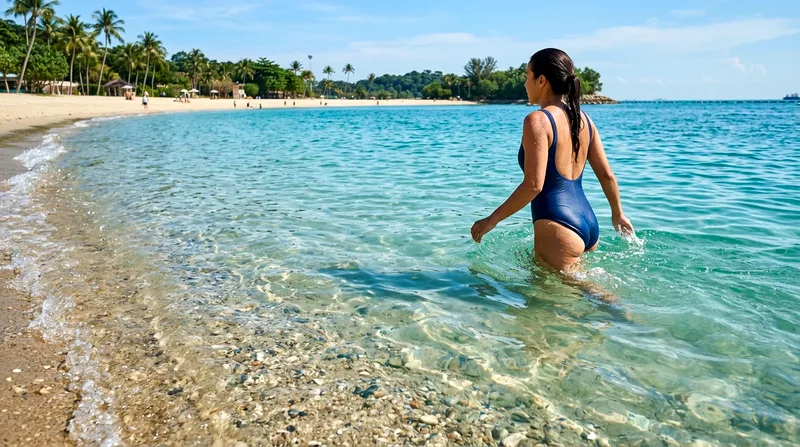
Sentosa sits just off Singapore's south coast, connected by a short causeway, a cable car, and a pedestrian boardwalk. It's Singapore's resort island—part theme park, part beach escape, part convention centre. Families with children will get the most mileage here; solo travelers and couples chasing culture should budget less time than they think, because once you've done Universal Studios Singapore and the beach, there isn't a second layer of depth the way there is in Chinatown.
My honest take: Sentosa is good value for a single full day, not a multi-day stay. Hotel rates on the island run noticeably higher than comparable rooms in the city, and you're paying for proximity to attractions you might only use once.
Main attractions overview
Universal Studios Singapore anchors the island, alongside S.E.A. Aquarium, Adventure Cove Waterpark, and three artificial beaches—Siloso, Palawan, and Tanjong. The Skyline Luge and cable car add an hour or two if you've got kids wanting more motion. Evening draws the Wings of Time light-and-water show at Siloso Beach, included free with some hotel packages but ticketed separately otherwise.
Tour and ticket options
Most visitors buy a Sentosa attractions pass bundling two or three experiences—Universal Studios plus the aquarium is a common combination—rather than single tickets, since bundles usually save money over buying separately. Cable car tickets from Mount Faber or HarbourFront are sold separately from island entry. Check current prices and combo options before booking, as ticket structures change and single-day versus multi-attraction passes vary in value depending on how many things you plan to do.
Marina Bay: Modern Singapore and Icons
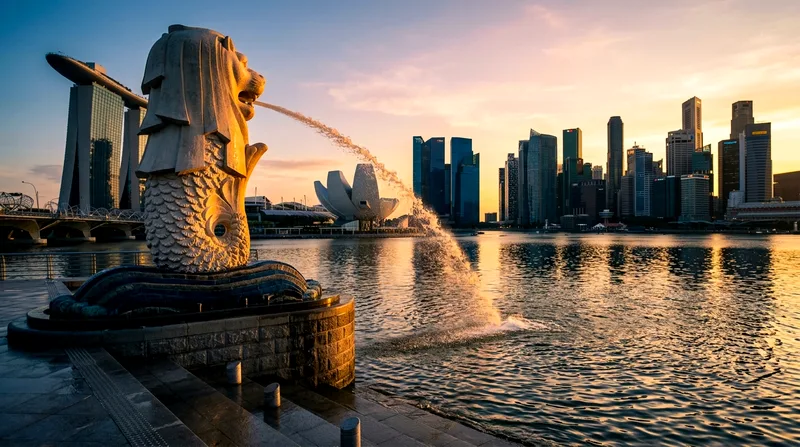
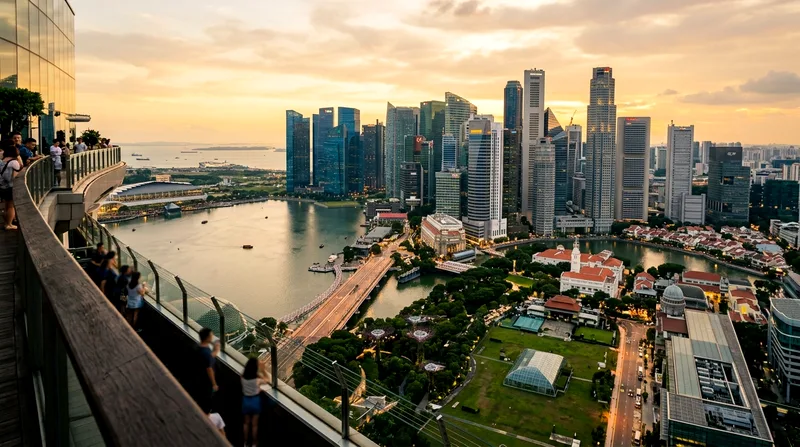
Marina Bay is the Singapore of postcards: Marina Bay Sands' three towers and surfboard-shaped SkyPark, the Merlion, and Gardens by the Bay's Supertree Grove across the water. It's also the most expensive district to sleep in, and arguably the least representative of daily Singaporean life—this is the showroom, not the living room.
I find Marina Bay essential for one evening but overrated as a multi-night base. The skyline views are genuinely worth seeing, ideally from across the water near the Merlion rather than from inside Marina Bay Sands itself, where you pay for SkyPark access. Families appreciate the flat, stroller-friendly promenade; fashionistas will want the Shoppes at Marina Bay Sands, though Orchard Road has more range for actual shopping.
Landmarks and viewpoints
The Helix Bridge connects Marina Centre to Marina Bay Sands and offers free night views of the skyline—better value than paying for the SkyPark observation deck if budget matters more than altitude. Gardens by the Bay's Cloud Forest and Flower Dome conservatories are ticketed separately from the free outdoor Supertree Grove, which lights up nightly around 7:45pm and 8:45pm for a sound-and-light show.
Guided tours and activities
Night cruises along Marina Bay and the Singapore River typically run 30 to 60 minutes and give a lower-angle view of the skyline you can't get on foot. Gardens by the Bay sells combination tickets covering both conservatories plus OCBC Skyway access in the Supertree Grove—worth it if you're doing both anyway, less so if you only care about photos from ground level. Compare current cruise and garden ticket prices before booking.
Chinatown and Tanjong Pagar: History and Dining
Chinatown and neighbouring Tanjong Pagar form the most historically layered pairing in this Singapore neighbourhoods guide. Chinatown retains shophouse rows, incense-filled temples, and hawker stalls serving dishes that predate the country's independence in 1965. Tanjong Pagar, a short walk south, has gentrified into a district of craft coffee bars, Korean restaurants, and rooftop lounges inside restored shophouses.
This pairing works well for couples and food lovers who want a full day moving from temple visits to a serious dinner without changing MRT lines. One caution: Chinatown's Pagoda Street and Smith Street get genuinely crowded with tour groups by late morning—go before 9am for temples, or in the evening for food, and skip the midday crush entirely.
Cultural sites and temples
The Buddha Tooth Relic Temple on South Bridge Road is Chinatown's centrepiece, built in 2007 in Tang dynasty style, with a museum on the upper floors that's free to enter (donations requested). Sri Mariamman Temple, Singapore's oldest Hindu temple dating to 1827, sits a few minutes' walk away—visiting both in sequence shows the religious mix packed into a few hundred metres.
Food tours and experiences
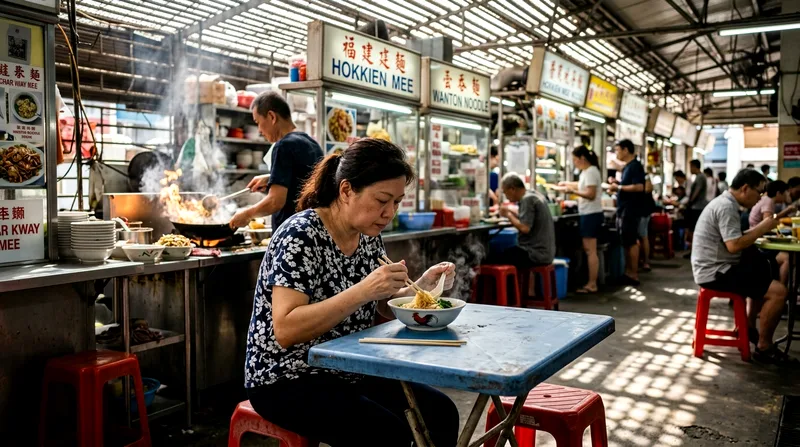
Chinatown Complex Food Centre, one of Singapore's largest hawker centres, holds the Michelin-recognised Hawker Chan stall alongside dozens of other vendors—arrive by 11:30am to beat the lunch queue. Guided food tours through Chinatown and Tanjong Pagar typically run three hours, mixing hawker stalls with a sit-down dim sum or Peranakan stop. Compare current food tour prices and group sizes before booking; smaller groups move faster through crowded hawker centres.
Orchard Road: Shopping and Entertainment
Orchard Road is Singapore's shopping spine, roughly 2.2 kilometres of malls running from Tanglin to Dhoby Ghaut. It's the obvious answer to "where should I stay for shopping and entertainment," and it earns that reputation—but it's also the least characterful district on this list, closer in feel to Hong Kong's Causeway Bay than to anything distinctly Singaporean.
Fashionistas should budget at least a full day here; everyone else can treat it as a half-day stop. Families appreciate the air-conditioned, stroller-friendly malls during the midday heat, which is a legitimate reason to base here with young kids even if the district itself feels generic.
Shopping districts and malls
ION Orchard sits right above Orchard MRT station and covers mass-market to luxury brands across eight floors. Takashimaya at Ngee Ann City is better for mid-range fashion and a reliable food hall in the basement. For something different, head to Tanglin Mall near the quieter western end, which skews toward family-focused shops and is far less crowded on weekends than the malls closer to Somerset.
Dining and nightlife
Orchard Road's food halls—Food Republic and Din Tai Fung outlets scattered through several malls—cover reliable, mid-priced options, but for real nightlife head toward Emerald Hill, a row of restored Peranakan shophouses off Orchard Road converted into bars. It's a far better evening option than the malls themselves, which mostly close by 10pm.
East Coast and Nature Reserves: Outdoor Experiences
East Coast Park runs about 15 kilometres along the southeastern shoreline, a flat ribbon of cycling paths, barbecue pits, and seafood restaurants facing the Singapore Strait. It's the district locals actually use on weekends, which gives it a different energy from the tourist-dense core. Inland, the Central Catchment Nature Reserve and MacRitchie Reservoir offer genuine rainforest trails, including the elevated TreeTop Walk suspension bridge.
Senior travellers and families should note East Coast Park is flat and paved—easy walking or cycling, unlike MacRitchie's hillier, humid trails. If you want greenery without serious hiking, East Coast wins. If you want something closer to Bali's jungle treks in miniature, MacRitchie is the better—if more demanding—choice.
Parks and nature activities
Bicycle and inline skate rentals line East Coast Park, typically charged by the hour, with East Coast Lagoon Food Village nearby for post-ride chilli crab or satay. MacRitchie's main loop around the reservoir takes roughly two to three hours on foot; the TreeTop Walk section adds another hour and is closed on Mondays for maintenance.
Guided nature tours
Guided MacRitchie treks, often run early morning to catch long-tailed macaques and monitor lizards before the heat sets in, typically last three to four hours including transport from the city. Kayaking tours along East Coast's lagoon or Kallang River are a lower-effort alternative if hiking isn't your thing. Check current tour schedules and prices before booking, since early slots fill first during school holidays.
Frequently asked questions
Which Singapore neighbourhood is best for food lovers?
Chinatown and Tanjong Pagar together offer the widest range—hawker food, including the Michelin-recognised Hawker Chan stall in Chinatown Complex, plus Tanjong Pagar's craft coffee and modern Asian restaurants within a 10-minute walk. Kampong Glam runs a close second for Malay and Middle Eastern food along Arab Street and North Bridge Road.
Where should I stay for shopping and entertainment?
Orchard Road, without much competition. It has the highest concentration of malls in Singapore, direct MRT access via Orchard and Somerset stations, and enough restaurants and bars at Emerald Hill to cover evenings too. Expect mid-to-high hotel rates compared to Chinatown or East Coast.
What is the most cultural neighbourhood in Singapore?
Chinatown edges out Kampong Glam for sheer density of historic sites—the Buddha Tooth Relic Temple and the 1827 Sri Mariamman Temple sit within a few minutes' walk of each other. Kampong Glam, centred on Sultan Mosque, is a close alternative if you want Malay and Muslim heritage specifically.
Which area has the best outdoor activities?
East Coast Park for flat cycling, beach barbecues, and seafood along a 15-kilometre coastal stretch. For actual rainforest and hiking, head inland to MacRitchie Reservoir and the TreeTop Walk, which is hillier and more humid but offers real jungle trails inside city limits.
How do I get between different neighbourhoods?
The MRT covers almost every district in this guide—Bugis for Kampong Glam, Chinatown and Tanjong Pagar on the same line, Marina Bay and Bayfront for the waterfront, Orchard for shopping. East Coast Park and Sentosa are the exceptions: East Coast needs a bus or taxi since there's no direct MRT stop, and Sentosa requires the cable car, monorail, or a walk across the causeway.