Planning a Singapore hop on hop off bus tour? Compare routes, stops, ticket prices and where to book online before you pick a pass.
What is a hop-on hop-off bus?
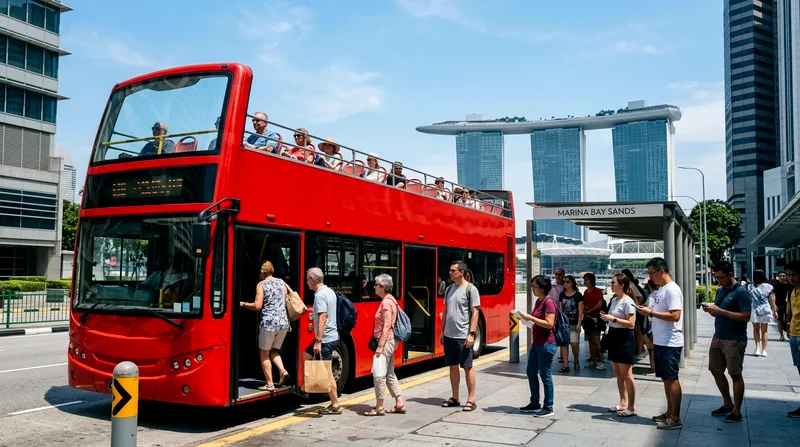
A hop-on hop-off bus in Singapore is an open-top or double-decker sightseeing bus that loops continuously past the city's major landmarks, letting you get off at any stop, explore for as long as you like, then catch a later bus on the same ticket to continue. It's a format you'll recognize from Bangkok, Hong Kong, and dozens of other cities — Singapore's version runs on a handful of colour-coded routes that cover the Civic District, Marina Bay, Orchard Road, Chinatown, and Little India.
The appeal is obvious: no fumbling with the MRT map, no taxi fares stacking up, and a seat with a view on the upper deck for photos of Marina Bay Sands or the Merlion. The downside is just as real. Buses run on fixed loops with waiting intervals typically between 20 and 45 minutes depending on time of day and traffic, so if you just miss one, you're standing at a stop longer than you'd like in Singapore's heat and humidity. Traffic along Orchard Road during evening rush hour can also stretch a loop considerably.
I'd rate it a tool, not a tour — it gets you between zones efficiently, but it won't teach you much about any single place. If you want depth at Chinatown or Little India, you're better off getting off and walking with a proper guide or doing your own research beforehand.
How it works
You buy a pass valid for a set number of calendar days — usually 1 or 2 — then board at any designated stop along the route, shown on a printed or app-based map. Buses circulate on a loop, so you never need to backtrack; just wait at the same stop type for the next bus. Most operators run buses roughly every 20–30 minutes during the day, tapering off in the evening. Onboard, you get either live narration or a recorded multilingual audio guide through headphones, pointing out landmarks as you pass. You stay on as long as you like at each stop, then flag down the next bus using your ticket or wristband as proof of payment.
Best for which travellers
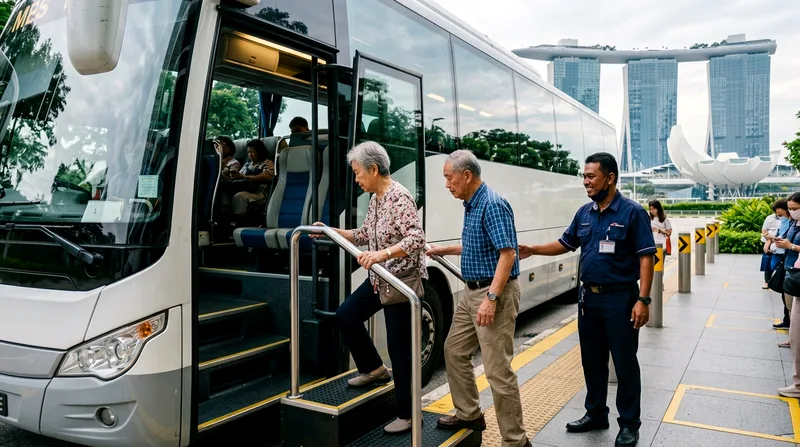
Families with young children benefit most — no walking fatigue, built-in air-conditioning, and an easy way to string together Gardens by the Bay, the Singapore Flyer area, and Orchard Road without managing strollers on the MRT. Senior travellers and anyone with mobility concerns get similar value: fewer stairs, less standing. First-time visitors on a tight 2-3 day schedule get a fast mental map of the city's geography. Solo travelers and fashionistas chasing specific shopping or café spots usually do better on foot or by MRT, since the bus's fixed stops rarely align with smaller, specific destinations.
Routes and stops explained
Singapore's hop-on hop-off bus network is generally organized into colour-coded loops — most commonly a Red Route and a Blue Route, sometimes supplemented by a Green or Yellow route and a night tour, depending on the operator. Each loop takes roughly 90 minutes to 2 hours to complete end to end without any stops, though with traffic and stop frequency it can run longer. The two main loops are designed to be complementary: Red leans toward the CBD, Marina Bay, and colonial-era sights; Blue swings further out toward Orchard Road, Little India, and sometimes Sentosa Island via a separate shuttle add-on.
Check the specific route map on the operator's official site before booking, since routes and stop numbers do get revised periodically — what's marked Red one season may shift slightly the next.
Red route highlights
The Red Route typically threads through the Civic District, Marina Bay Sands, Gardens by the Bay, Merlion Park, and the Esplanade, with a stop near Chinatown. This is the loop most first-time visitors want, since it covers the postcard sights in a single, dense corridor along the waterfront. Expect the bus to crawl a bit near Marina Bay in the late afternoon when tour groups and private cars clog the roads around the Sands. If photography is your priority, aim for a late-morning ride when the light on the bay is cleaner and crowds at Merlion Park are thinner than midday.
Blue route highlights
The Blue Route generally covers Orchard Road's shopping strip, Little India, and sometimes Bugis or Kampong Glam, giving a contrast to the Red Route's waterfront focus. It's the better pick if your priority is retail therapy or textile and spice shopping in Little India rather than skyline photos. Sentosa Island is usually not included directly on either core loop — it typically requires a separate shuttle or the Sentosa Express monorail, so don't assume your hop-on hop-off pass gets you onto the island without an extra fare.
Ticket types and what's included
Most Singapore sightseeing bus tickets come in 1-day and 2-day formats, with some operators offering a combo that bundles in a river cruise or a night safari transfer. Published prices for 1-day adult tickets have hovered in the range of roughly SGD 40-45, with 2-day tickets around SGD 55-65 — treat these as approximate and always confirm current singapore hop on hop off bus price on the official site before paying, since operators adjust rates periodically and seasonal promotions move the numbers around.
Child tickets are usually discounted, and family bundles sometimes beat buying individual tickets — worth checking before you default to one adult ticket per person.
A 2-day pass costs modestly more than a 1-day ticket but suits travellers who want to split routes across two unhurried outings.
Singapore hop-on hop-off bus ticket options compared
| Ticket Type | Approx. Price (SGD) | Validity | Best For |
|---|---|---|---|
| 1-Day Adult | 40-45 | 24 hours from first use | Stopovers, single free day |
| 1-Day Child | 25-30 | 24 hours from first use | Families on tight schedules |
| 2-Day Adult | 55-65 | 48 hours from first use | First-time visitors, slower pace |
| 2-Day Child | 35-40 | 48 hours from first use | Families spreading routes over 2 days |
| Combo (bus + river cruise) | 60-75 | Varies by package | Visitors wanting Marina Bay cruise included |
Prices are approximate and change periodically; confirm current figures on the official operator site before booking.
1-day vs 2-day passes
A 1-day pass makes sense if you're squeezing Singapore into a stopover or a single free day between business meetings — you ride both loops once, hit the big names, and move on. A 2-day pass earns its extra cost if you want to split Red and Blue routes across two mornings, avoiding the fatigue of trying to cram 3-4 hours of riding into one day. For families, the 2-day option often works out better value per dollar since it absorbs an inevitable slow afternoon with tired kids without wasting the ticket.
What's covered and excluded
Tickets cover unlimited rides on the included routes for the ticket's valid days, onboard audio commentary, and in some packages a short river cruise. They do not typically include entry tickets to attractions — Gardens by the Bay's Cloud Forest and Flower Dome, the Singapore Flyer, or Sentosa's paid attractions are all separate purchases. Food, MRT connections beyond the bus stops, and Sentosa Island shuttle fares are usually excluded too. Read the fine print on the operator's page rather than assuming "sightseeing pass" means all-inclusive — it rarely does anywhere, whether in Singapore, Kuala Lumpur, or Bangkok.
Where to buy tickets online
Buying ahead online is worth doing in Singapore — it skips the queue at the main boarding point near Suntec City or Marina Bay and often works out slightly cheaper than paying onboard. You'll typically get an e-ticket or QR code redeemed at the first boarding point rather than a physical ticket mailed to you.
Official operator websites
Booking directly through the operator's own site is the safest route if you want the most current singapore sightseeing bus tickets price and route map, plus a clear cancellation policy. Official sites usually list exact stop locations, first and last departure times, and any temporary route closures due to events like the Formula 1 night race or National Day rehearsals, which can shut down roads near the Padang for days at a time. Always check the cancellation window — many allow free changes up to 24 hours before the ticket's validity starts, but this varies, so read the terms rather than assuming.
Third-party booking platforms
Platforms like Klook, GetYourGuide, and Viator list Singapore hop-on hop-off tickets alongside other attractions, which is convenient if you're bundling a Gardens by the Bay ticket or a Night Safari transfer in the same checkout. They sometimes run bundle discounts not available on the operator's own site. The trade-off: customer service runs through the platform rather than the bus company directly, so refunds or date changes can take a bit longer to process. Compare current prices across both the official site and a third-party platform before you book — the difference is sometimes a few dollars, sometimes nothing at all.
Is it worth it for your trip?
Here's my honest take: a hop-on hop-off bus is worth it for roughly one day of a Singapore trip, maybe two if you're moving slowly or traveling with kids or older relatives. Beyond that, Singapore's MRT is so efficient — clean, air-conditioned, frequent, and cheap at a few dollars a ride with an EZ-Link card — that the bus starts to feel like a slower, pricier alternative for getting around once you know roughly where things are.
Compare that to Bangkok or Ho Chi Minh City, where traffic and confusing transit systems make a hop-on hop-off bus a genuinely strong time-saver for the whole trip. Singapore doesn't have that problem to the same degree, so the bus's main value here is the curated overview and the open-top photo ops, not raw transport efficiency.
Budget travellers
If you're counting every dollar, skip the bus. A 2-day pass at roughly SGD 55-65 covers what an EZ-Link card and a few MRT rides would do for under SGD 15-20 total. Walking tours of Chinatown or Kampong Glam, often free or by donation, deliver more cultural context per dollar. The bus makes sense for budget travellers only if time, not money, is the scarce resource — say, a single free afternoon during a business trip.
First-time visitors
For a first visit, especially one under 4 days, the bus earns its cost by compressing orientation time. You'll see Marina Bay Sands, the Merlion, Orchard Road, and Little India in a single day, then decide which deserve a longer, slower return visit on foot or by MRT later in the trip. Pair a 1-day bus pass on day one with the Singapore River cruise or a Sentosa day pass on day two — that combination covers most of what a short first-timer itinerary needs without over-scheduling.
Frequently asked questions
How long can you stay on a hop-on hop-off bus?
There's no time limit at any single stop — you can stay as long as you like and catch a later bus using the same ticket. The practical limit is your ticket's validity window, typically 24 or 48 hours from first boarding, after which you'll need a new pass to keep riding.
Do you need to book in advance?
It's not strictly required — you can usually buy a ticket at the main boarding point — but booking online ahead saves queue time and sometimes a small amount on price. During peak tourist season or around major events like the F1 race weekend, advance booking also guarantees you a ticket rather than risking a sold-out day.
What's the difference between 1-day and 2-day tickets?
A 1-day ticket gives unlimited rides for 24 hours from first use; a 2-day ticket extends that to 48 hours, usually for roughly SGD 10-20 more. The 2-day option suits travelers who want to split the Red and Blue routes across separate outings rather than rushing both into one day.
Can you use hop-on hop-off buses on public holidays?
Yes, buses generally operate on public holidays, though frequency may be reduced and certain routes near the Padang or Marina Bay can be diverted during major events or National Day rehearsals. Check the operator's site close to your travel date if your trip coincides with a public holiday or known event.
Is commentary included on the bus?
Yes — most Singapore hop-on hop-off buses include recorded multilingual audio commentary through onboard headphones, covering the history and significance of major stops like Merlion Park and the Civic District. A few operators add live guides on select routes, but recorded audio is the standard across most tickets.