Planning to buy S.E.A. Aquarium Singapore tickets? Compare prices, VIP options, best visiting times, and family routes through Sentosa's marine park.
What is S.E.A. Aquarium and Why Visit
S.E.A. Aquarium sits inside Resorts World Sentosa, on Sentosa Island just south of mainland Singapore, and it's one of the largest aquariums in Southeast Asia by volume of water. The name stands for South East Asia, and the whole complex is built around the idea of tracing marine habitats from the Java Sea through to the open ocean — a concept that sounds academic on paper but plays out as a genuinely absorbing walk-through experience. Expect somewhere in the range of 100,000 marine animals across more than 40 zones, including sharks, manta rays, and a viewing panel in the Open Ocean habitat that ranks among the largest single aquarium windows in the world.
I'd put it on the same tier as Hong Kong's Ocean Park for marine content, though S.E.A. Aquarium is more compact and indoor, with none of the rollercoaster-and-panda sprawl you get in Hong Kong. If you've done the Bangkok Sea Life Ocean World at Siam Paragon, think of S.E.A. Aquarium as a significantly larger, better-lit version of the same format — fewer gimmicks, more genuine marine biology signage, and tanks built for slow walking rather than rushing past.
Highlights and marine zones
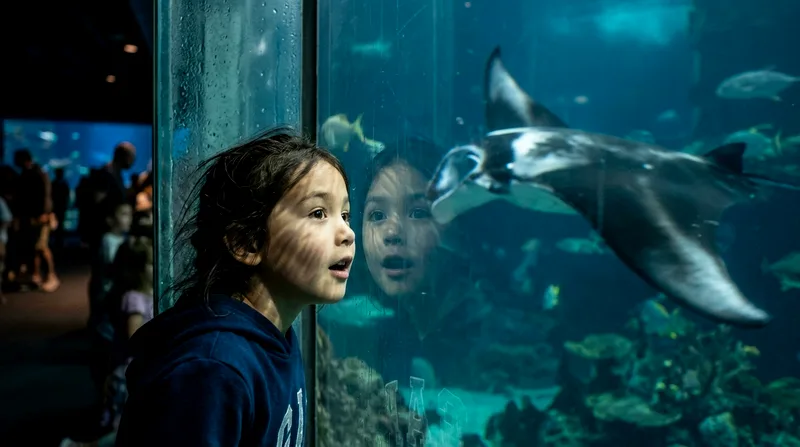
The zones run roughly from shallow coastal habitats near the entrance to deep ocean tanks further in, finishing at the Open Ocean habitat — a vast tank holding manta rays, sharks, and schools of fish that you view through an acrylic panel reportedly among the thickest and widest on display anywhere. Along the way you'll pass a shipwreck zone, a jellyfish gallery that photographs well in low light, and smaller touch-pool style interactions in certain sections (though these rotate and aren't guaranteed year-round). The route is linear and one-directional, so you won't backtrack or get lost, which matters if you're managing a toddler or a wheelchair.
Why it's ideal for families
It's fully air-conditioned, flat underfoot, and the one-way layout means you don't need to plan a route — you just follow the path. For families with children under six, this matters more than it sounds: no stairs to manage with a stroller, no sun exposure, and bathrooms plus a café roughly midway through. The downside is that it's genuinely popular with school groups on weekday mornings during term holidays, so a visit that should take ninety minutes can stretch past three hours if you're weaving through tour groups at every tank. Don't assume a quiet Tuesday will stay quiet — check Singapore's school holiday calendar before you commit to a date.
Ticket Options and Pricing
Sea Aquarium Sentosa price points generally fall into a few bands: standard single-attraction admission, combo tickets bundling S.E.A. Aquarium with the adjacent Adventure Cove Waterpark or S.E.A. Aquarium with Singapore Oceanarium pricing (the broader complex has been rebranded and expanded in recent years, so check what's currently included), and multi-attraction Sentosa passes that fold in cable car rides or Universal Studios Singapore. As a rough guide, adult standard admission typically sits in the SGD 40–45 range, with child tickets (usually ages 4–12) priced lower, and children under 4 often free. These figures shift periodically, so treat them as a planning baseline, not a quote.
Compared with Hong Kong Ocean Park (general admission runs noticeably higher once you convert currency) or Bangkok's Sea Life Ocean World (cheaper, but a fraction of the size), S.E.A. Aquarium sits in the middle — not a budget attraction, but reasonable for what you get given Singapore's overall higher cost of living.
Standard online tickets offer the best value for most visitors, while VIP and combo passes only pay off for specific travel styles.
S.E.A. Aquarium Singapore ticket types compared by price tier, access, and best use case
| Ticket Type | Price Tier | Queue Access | Best For |
|---|---|---|---|
| Standard admission (online) | Mid | Regular entry | Most families and solo visitors |
| Standard admission (walk-up) | Mid-High | Regular entry | Last-minute, no planning |
| VIP / behind-the-scenes | High | Priority lane | Marine enthusiasts, special occasions |
| Combo with Adventure Cove | High | Regular entry | Families staying a full day on Sentosa |
| Multi-attraction Sentosa pass | Variable | Regular entry | Visitors doing 3+ Sentosa attractions |
Typical price tiers only; exact figures change seasonally, so check current rates before booking.
Standard and VIP ticket tiers
Standard tickets grant general admission with no time limit on how long you stay inside, though entry itself is often timed to manage crowd flow. VIP or premium tiers typically add things like guided behind-the-scenes tours, feeding sessions, or priority entry lanes that bypass the main queue — useful on a Saturday, unnecessary on a quiet Tuesday morning. I wouldn't bother with VIP unless you specifically want the behind-the-scenes content or you're traveling with someone who can't stand in line for more than a few minutes. The price jump for VIP access is substantial, often double the standard rate, and the marginal benefit for a typical family visit is small.
Online booking and group discounts
Booking S.E.A. Aquarium online ahead of your visit is close to essential now — walk-up counter prices are usually higher than pre-booked e-tickets, and on peak days (weekends, public holidays, school breaks) walk-up queues at the physical counter can run 20–30 minutes before you even reach the gate. Official booking channels and major third-party platforms (Klook, GetYourGuide, and similar) all carry it, often with bundled Sentosa transport or combo-attraction pricing. Group rates for 20+ visitors are usually available through the official sales team rather than consumer platforms — relevant if you're organizing a school trip or extended family outing. Always compare current prices when booking, since bundled packages change seasonally and what looks like a discount isn't always cheaper than buying attractions separately.
How to Visit: Independent vs Guided Tours
Most visitors do S.E.A. Aquarium independently, , that's the right call for the vast majority of people. The layout is self-explanatory, signage is in English (with some Mandarin and Malay), and there's no technical knowledge required to appreciate what you're seeing. A guided tour adds value mainly if you want marine biology context beyond the placards, or if you're booking it as part of a broader Sentosa guided day that also covers Fort Siloso or the cable car.
Self-guided exploration tips
Pick up a zone map at entry or screenshot the digital version beforehand — while the route is linear, knowing roughly where the Open Ocean tunnel sits (it's near the end) helps you pace yourself instead of rushing the first half and running low on patience for the finale, which is genuinely the best part. If you're traveling with children, build in a stop at the mid-point café; the air-conditioning is strong throughout, but kids get tired of walking past tanks faster than adults expect. Photography is allowed without flash, though the glass causes glare — angle your shots slightly rather than shooting straight on.
Guided tour and package options
Guided tour operators running Sentosa day packages typically include S.E.A. Aquarium as one stop among three or four, paired with the cable car, Wings of Time night show, or Universal Studios. These work well for solo travelers or couples short on time who want logistics handled, but they move you through the aquarium faster than I'd personally choose — often 45–60 minutes versus the 90–120 minutes an independent visit deserves. If marine life is your main interest rather than a box to tick, skip the bundled tour and buy aquarium admission on its own.
Best Time to Visit and What to Expect
Sea Aquarium opening hours are typically 10am to 7pm, with last admission around 6pm, though hours can shift around public holidays — confirm on the official site before you travel rather than relying on older reviews. The aquarium operates daily, no weekly closure, which makes it a reliable rainy-day fallback if your beach or outdoor Sentosa plans get rained out, a real possibility given Singapore's frequent afternoon showers.
Peak vs quiet periods
Weekday mornings right at opening are the quietest window, consistently. Weekends, Singapore school holidays, and regional public holidays (Chinese New Year, year-end school break) bring noticeably heavier crowds, particularly from 11am through mid-afternoon when tour buses and school groups converge. If you have flexibility, a Tuesday or Wednesday morning visit beats a Saturday by a wide margin — expect thinner crowds at the Open Ocean tunnel and shorter waits for photo spots.
Duration and route planning
Plan for two to three hours on a first visit, less if you're moving briskly, more if you're reading every panel or traveling with young children who want to linger at every tank. The route doesn't loop back, so there's no way to "save" a zone for later — pace accordingly. Combining it with Adventure Cove Waterpark in the same day is ambitious; the aquarium alone can fill a morning, and doing both means a long day with a change of clothes required mid-visit.
Nearby Attractions and Add-Ons
Sentosa Island is dense with paid attractions clustered close together, which makes combo planning worthwhile but also easy to overdo. S.E.A. Aquarium sits within Resorts World Sentosa, a short walk from Universal Studios Singapore and the Adventure Cove Waterpark, with the Sentosa Express monorail connecting back to VivoCity on the mainland in about four minutes.
Sentosa Island experiences
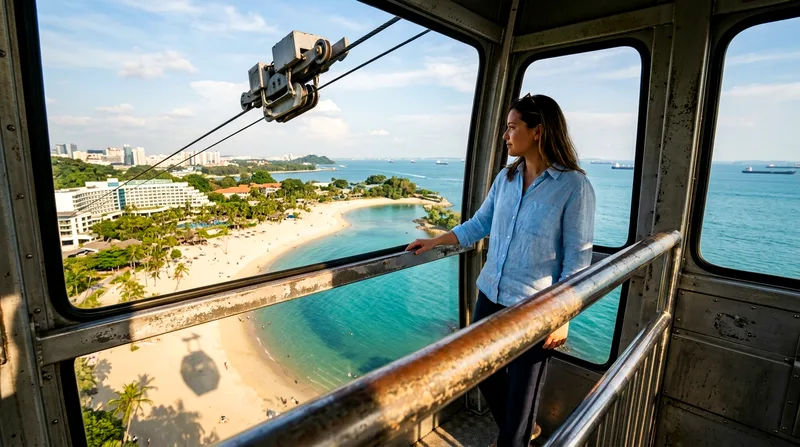
Beyond the aquarium, Sentosa offers Fort Siloso (a preserved WWII coastal fort, free to explore in parts), Skyline Luge Sentosa, the Sentosa cable car linking to Mount Faber, and Siloso, Palawan, and Tanjong beaches for a free, low-cost afternoon. If you're comparing Singapore's family-attraction density to somewhere like Phuket or Bali, Sentosa wins on convenience — everything sits within a compact, walkable or monorail-connected zone, versus the longer transfers typical of Thai or Indonesian island resorts.
Combination tickets and packages
Combo tickets pairing S.E.A. Aquarium with Universal Studios Singapore or Adventure Cove typically offer a modest saving over buying each separately — usually in the 10–15% range — but only make sense if you genuinely plan to visit both within the validity window, often a single day or a consecutive-day pass. Don't buy a three-attraction bundle just because it looks like a deal; if you only realistically have time for two, you're paying for access you won't use.
Frequently asked questions
How much do S.E.A. Aquarium tickets cost?
Standard adult admission typically falls in the SGD 40–45 range when booked online, with discounted child pricing for ages 4–12 and free entry for younger children at many booking platforms. VIP and combo packages cost more — sometimes double for behind-the-scenes access. Prices shift seasonally, so check current rates on official or major booking platforms before finalizing your date.
Can I book S.E.A. Aquarium tickets online?
Yes, and it's the recommended approach — online tickets are usually cheaper than walk-up counter prices and let you skip the ticketing queue entirely. Official Resorts World Sentosa channels and third-party platforms like Klook or GetYourGuide both sell timed-entry tickets, often bundled with Sentosa transport.
What is the best time to visit S.E.A. Aquarium?
Weekday mornings right at opening, typically around 10am, offer the thinnest crowds. Avoid weekends, Singapore school holidays, and Chinese New Year week if you want to move through the Open Ocean tunnel without jostling for glass-front space.
How long does it take to see the entire aquarium?
Budget two to three hours for a comfortable, unhurried visit. Families with young children or anyone reading every information panel should lean toward the higher end; a brisk solo walk-through can be done in under ninety minutes.
Are there VIP or fast-track ticket options?
Yes — VIP tiers typically include priority entry lanes and sometimes behind-the-scenes or feeding-session access, at a notably higher price than standard tickets. They're worth it on crowded weekends or for marine enthusiasts wanting deeper access, but unnecessary for a typical quiet-weekday visit.