Book a Pulau Ubin tour from Singapore. Bumboat access, guided bike and kayak tours, Chek Jawa wetlands. Day trip guide for all fitness levels.
What is Pulau Ubin and why visit
Pulau Ubin sits in the Straits of Johor, off Singapore's East Coast, and it looks almost nothing like the rest of the country. No malls, no MRT, no high-rises — just granite quarries turned lakes, rubber plantations gone wild, and a scatter of wooden kampong houses still inhabited by a handful of residents. The island is roughly 10 square kilometres, small enough to cross by bike in under two hours but varied enough to fill a full day if you stop often.
What makes it worth a trip isn't a single headline attraction — it's the contrast. You're 10 minutes by boat from Changi, yet the pace, noise level, and scenery belong to a different decade. I'd rank it above Sentosa for anyone who's already done the cable car and Universal Studios circuit and wants something that isn't curated. It's also one of the few places in Singapore where you can genuinely get a little lost on unmarked trails, which some visitors love and others find mildly stressful.
Island geography and attractions
The main village clusters near the jetty, where you'll find bike rental shacks, a few basic eateries serving fried noodles and coconuts, and a small visitor centre. From there, trails fan out toward Chek Jawa Wetlands on the southeastern tip, Ketam Mountain Bike Park for more technical riding, and several disused quarries — Jejawi, Ubin, and Fairy Point — that now function as still, green-tinted lakes ringed by granite walls. None of these are swimming spots; signage explicitly discourages it, and the water is deeper and colder than it looks.
Ideal for nature lovers and seniors
Seniors who want outdoor time without the hills of places like Bukit Timah will find Pulau Ubin's terrain mostly flat and forgiving, especially the paved stretch from the jetty to Chek Jawa. Rental shops offer basic single-speed bikes, but increasingly also electric-assist models, which make a real difference if you're not used to cycling regularly. Walking the main road instead of cycling is entirely feasible too — it takes about 45 minutes one way to Chek Jawa on foot.
Getting there: bumboat logistics
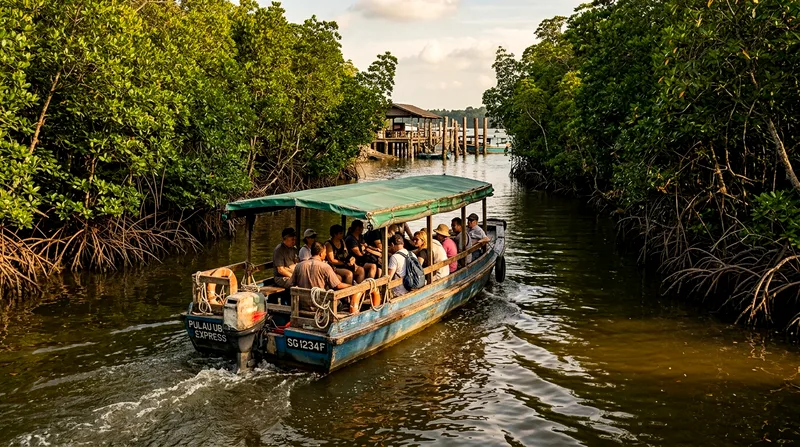
Access to Pulau Ubin is only by bumboat, and that single fact shapes the whole trip. These are weathered wooden boats, each holding around 12 passengers, and they don't run on a fixed timetable — they leave once full. On a quiet weekday morning that might mean a 20-minute wait; on a Sunday afternoon, expect to queue 30–45 minutes, sometimes longer during school holidays.
This is the detail most first-timers get wrong: there's no app, no advance online booking for the boat itself, and no guaranteed departure time. If you're planning a guided tour, your operator will usually handle the boat logistics and group you with others heading the same way, which removes a layer of uncertainty — a reasonable trade-off for travelers who dislike ambiguity.
Changi Point Ferry Terminal access
Boats depart from Changi Point Ferry Terminal, reachable by bus from Tanah Merah MRT (around 20–25 minutes) or by taxi from the city centre (roughly 30–40 minutes depending on traffic). There's a small car park nearby if you're driving, though it fills up by mid-morning on weekends. Toilets and a handful of food stalls are on-site, useful since the island itself has limited options.
Bumboat schedules and capacity
Boats typically start running around 6am and continue until about 7pm, though the last boat back from Ubin can leave earlier on quieter days — don't assume you can linger until dark. The crossing itself takes roughly 10 minutes. Capacity is the real constraint: each boat waits until it has enough passengers (or cargo) to justify the trip, so arriving with a full group, as guided tours do, generally means a faster departure than showing up solo and waiting for others to trickle in.
Guided tours vs independent exploration
This is the real decision point for any pulau ubin tour singapore search, and the honest answer is: it depends on what you want from the day. A guided tour — typically a half-day cycling or kayaking itinerary with a local guide — gives you structure, a fixed route, safety equipment, and someone who knows the tide schedule at Chek Jawa without you having to check it yourself. Independent exploration gives you flexibility and costs less, but it demands more self-sufficiency: reading trail signs, renting your own bike, carrying water, and timing Chek Jawa visits around the tides.
I'd lean toward a guided tour for solo travelers unfamiliar with cycling on gravel, for families with younger children, and for anyone visiting for the first time who wants to see Chek Jawa's boardwalk at the right tide without guesswork. Independent trips suit confident cyclists, repeat visitors, and budget travelers who don't mind figuring things out as they go.
A guided tour costs more but removes the guesswork around tides, routes, and bike rental queues.
Pulau Ubin tour options compared: guided vs independent visits
| Option | Typical duration | Approx. cost | Best for | Flexibility |
|---|---|---|---|---|
| Guided cycling tour | 3-4 hours | SGD 40-80 per person | First-timers, families | Low |
| Guided kayaking tour | 2-3 hours | SGD 50-90 per person | Mangrove exploration | Low |
| Independent cycling | Flexible, 3+ hours | SGD 10-25 bike rental | Confident cyclists | High |
| Independent walking | Flexible, 2-4 hours | Free (bumboat fare only) | Seniors, slow pace | High |
Figures are typical ranges only; confirm current prices and inclusions before booking.
Guided cycling and kayak tours
Guided cycling tours usually run 3–4 hours, covering the main village, a quarry viewpoint, and Chek Jawa, often with a stop for local snacks. Kayaking tours explore the mangrove-fringed coastline and sometimes paddle toward quieter coves inaccessible by bike — a good option if you want to see the mangroves up close rather than from a boardwalk. Both types of tour typically include equipment and a guide fluent in English; always confirm group size caps, since larger groups move slower and see less.
Self-guided day trip planning
If you go independently, rent a bike near the jetty immediately on arrival — rental shops don't take reservations, and the better bikes go first on weekends. Pick up a basic trail map at the visitor centre, because mobile signal is patchy in parts of the island's interior. Budget at least 3 hours for a loop that includes Chek Jawa, and avoid the mountain bike trails at Ketam unless you've ridden technical terrain before; the loose rock sections have caught out plenty of casual riders.
Tickets, entry and costs
There's no entry fee to step onto Pulau Ubin itself — the island is open access, managed partly by Singapore's National Parks Board. The costs you'll actually pay are the bumboat fare, bike rental, and any guided tour you book on top.
Bumboat fares and tour pricing
Bumboat fares are charged per person, per direction, and are collected in cash at the jetty — typically a few Singapore dollars each way, slightly more if you're bringing a bicycle on board. Guided tours are priced separately and usually quoted per person for the full group experience; compare current prices and inclusions before you book, since what counts as "included" varies a lot between operators.
What's included in packages
A typical guided package includes the guide's fee, bike or kayak rental, and sometimes bottled water or a light snack — but rarely the bumboat fare itself, which you often pay separately at the jetty. Always check whether helmets are provided, since not every rental shop stocks them, and ask whether the Chek Jawa boardwalk stop is timed to the tide or just added regardless of water level.
Best time to visit
Pulau Ubin has no shade canopy over most of its open trails, so the heat is the main variable to plan around, not the season — Singapore doesn't really have dry and wet seasons in the way Phuket or Bali do, just daily afternoon showers that can appear with little warning.
Seasonal weather and crowds
Weekday mornings, arriving before 9:30am, are the quietest window — shorter bumboat queues and cooler temperatures for cycling. Weekends and school holidays bring noticeably more visitors, longer boat waits, and busier bike rental counters. Rain showers typically build in the early afternoon, so an early start also reduces your odds of getting caught out on exposed trails without cover.
Tide times for water activities
Chek Jawa's intertidal flats are only worth visiting around low tide, when seagrass lagoons, sandbars, and marine life become visible from the boardwalk; at high tide, much of it disappears underwater and the walk feels far less rewarding. Check Singapore's tide tables (published by the Maritime and Port Authority) before you go, and build your bumboat timing around a low tide window if Chek Jawa is a priority — this is exactly the kind of detail a guide typically handles for you.
Nearby attractions and add-ons
Pulau Ubin pairs naturally with a couple of other Singapore experiences if you want to extend the "island escape" theme beyond one day.
Chek Jawa wetlands and birdwatching
Chek Jawa Wetlands deserves its own slow visit — a 1-kilometre boardwalk loops through mangrove, rocky shore, and sandbar habitats, with a viewing tower offering a wide look over the Straits of Johor toward Malaysia. Birdwatchers should bring binoculars; migratory shorebirds pass through between roughly September and March, overlapping with Singapore's main migratory season. Go early and quietly — large cycling groups passing through tend to scare off anything perched near the boardwalk.
Pulau Semakau and island hopping
For travelers who like the idea of Singapore's lesser-known islands, Pulau Semakau — an offshore landfill island turned surprising wildlife habitat — makes an interesting comparison, though access there requires registering with NParks-approved groups rather than a casual bumboat ride. It's a different kind of trip: more regulated, more about conservation education, less about do-it-yourself wandering. Don't try to combine both islands in one day; the logistics and permits don't align, and you'll end up rushing both.
Frequently asked questions
How do I get to Pulau Ubin from Singapore?
Take a bus or taxi to Changi Point Ferry Terminal, then board a bumboat — the only way across. Boats leave once full (around 12 passengers), run roughly 6am to 7pm, and take about 10 minutes to cross. There's no fixed schedule, so weekday mornings mean shorter waits than weekend afternoons.
Can I visit Pulau Ubin without a guided tour?
Yes, plenty of visitors go independently. Rent a bike near the jetty on arrival, pick up a trail map at the visitor centre, and plan your route around Chek Jawa's tide times. It's cheaper and more flexible, but you'll need to navigate trails and tide tables yourself rather than relying on a guide.
What is the best time to visit Pulau Ubin?
Arrive on a weekday morning before 9:30am for cooler temperatures and shorter bumboat queues. If Chek Jawa is on your itinerary, check Singapore's tide tables and aim to arrive around low tide, when the wetlands' sandbars and marine life are actually visible.
Are there age or fitness restrictions for tours?
No official age limits exist, but most trails involve some walking or cycling on uneven dirt paths. Seniors and families with young children should choose e-bikes or walking routes over mountain biking at Ketam, which has loose gravel and technical terrain unsuitable for beginners.
What should I bring for a Pulau Ubin day trip?
Bring cash (for the bumboat fare and bike rental, since card payment isn't reliable on the island), sun protection, insect repellent, drinking water, and comfortable closed shoes. A power bank helps too, since mobile signal and charging points are limited once you're off the main village stretch.